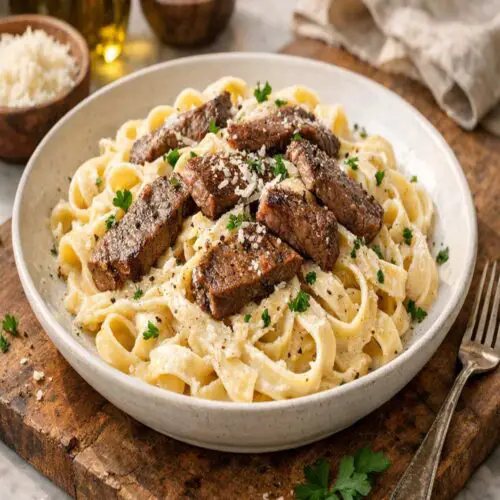
Beef Pasta Alfredo Recipe
There's something deeply satisfying about twirling a fork through silky fettuccine coated in a rich, savory sauce. This beef pasta alfredo brings together tender ground beef, earthy mushrooms, and a luxurious cream sauce that tastes like you've been cooking all day—but I promise you haven't. Pair it with a crisp green salad or roasted vegetables, and you've got a weeknight dinner that feels genuinely special. Looking for other indulgent beef dishes? Check out our Kroll's Corner Cheeseburger Sliders for another crowd-pleasing ground beef option.
Print
Pin
Servings: 4
Calories: 774kcal
Ingredients
- 1 medium yellow onion finely diced, about ¾ cup
- 1 pound ground beef 85/15 blend is ideal for texture and richness
- 2 large garlic cloves sliced thin so they soften quickly
- ¼ teaspoon freshly grated nutmeg (just a whisper
- 1 teaspoon Italian seasoning or combine ¼ teaspoon each of oregano, basil, thyme, and marjoram
- Fresh flat-leaf parsley about ½ cup loosely packed, divided for cooking and garnish
- Sea salt and freshly ground black pepper to taste throughout cooking
- 1 cup heavy cream full-fat is essential for authentic texture and flavor
- 1 cup fresh mushrooms cremini or white button, sliced about ¼-inch thick
- 8 ounce fettuccine pasta dried or fresh, both work beautifully
- 1 tablespoon extra virgin olive oil for cooking the base without burning
- ½ cup low-sodium chicken stock or vegetable broth as alternative
- ⅓ cup freshly grated Parmigiano-Reggiano cheese never the pre-grated type, which contains anti-caking agents
- ⅓ cup dry white wine sauvignon blanc or pinot grigio work well
Instructions
Step 1: Start Your Pasta Water and Cook the Pasta
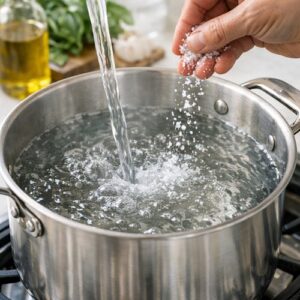
- Fill a large pot about three-quarters full with cold water and add a generous pinch of sea salt—your water should taste like the sea, which is how you season pasta properly. Bring it to a rolling boil over high heat. This typically takes 8-10 minutes depending on your stove. Add the fettuccine and stir immediately with a wooden spoon to prevent sticking. Cook according to your package directions, but taste it about a minute before the suggested time ends. You want the pasta al dente—tender but with a slight bite. This matters because you'll be tossing it with the sauce, which gives it a few more minutes to soften. Before draining, reserve 1 cup of the starchy cooking water in a measuring cup or small bowl. This pasta water is liquid gold—it'll help bind your sauce to the noodles. Drain the pasta in a colander and set aside, but don't rinse it. The starch clinging to the pasta helps the sauce cling too.
Step 2: Build the Base with Onion and Garlic
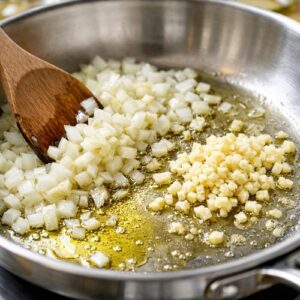
- While your pasta is cooking, heat the olive oil in a large skillet (12-inch is ideal) over medium-high heat. Let it warm for about 30 seconds—you'll see it shimmer slightly. Add the finely diced onion and cook for 3-4 minutes, stirring occasionally. You're looking for the onion to become translucent and slightly soft, with the edges just beginning to turn golden. This process, called sweating the onions, releases their natural sugars and creates a sweet, mellow base. Add the sliced garlic and cook for another 30-45 seconds until fragrant. You'll smell that wonderful garlic aroma—that's your cue. Be careful not to let garlic brown, which makes it bitter. We want it soft and sweet.
Step 3: Brown the Ground Beef
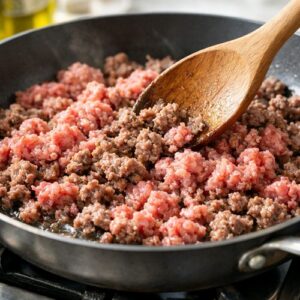
- Increase the heat to medium-high and add the ground beef directly to the skillet. Using a wooden spoon or spatula, break the meat apart as it cooks. Don't stir it constantly—let it sit for 30-45 seconds between stirs so it develops that beautiful golden-brown crust. This takes about 4-5 minutes total. You're finished when there's no pink remaining and the beef has darkened to rich brown. Pour off excess fat if there's more than 1 tablespoon pooling in the pan—you want flavor, not grease.
Step 4: Add the Mushrooms and Let Them Release Their Moisture
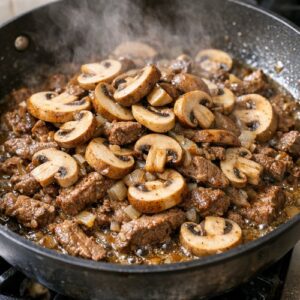
- Add the sliced mushrooms to the beef mixture and stir gently to combine. Cook for 3-4 minutes without stirring too much. The mushrooms will first absorb the available liquid, then release their own moisture as they soften. You'll notice the pan becomes more liquid—this is perfect and expected. When the mushrooms are tender and have released their liquid, you're ready for the next step. The color deepens slightly, and the texture becomes soft enough to cut with your spoon.
Step 5: Deglaze the Pan with Wine
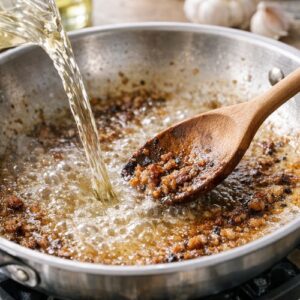
- Pour the dry white wine into the skillet and immediately begin scraping the bottom with your wooden spoon. You're lifting up all those beautiful browned bits stuck to the pan—this is called deglazing, and it's where so much flavor lives. The wine will sizzle and steam. Let the wine reduce for 2-3 minutes until about half the liquid has evaporated and you can barely smell the raw wine—instead, you'll notice a mellowed, savory aroma. This concentrated liquid becomes part of your sauce.
Step 6: Add Stock and Seasonings
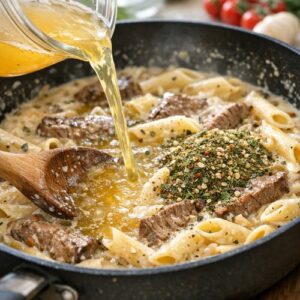
- Pour in the chicken stock and sprinkle the Italian seasoning over everything. Stir well to combine. Bring the mixture to a gentle simmer over medium heat. You're looking for small, lazy bubbles breaking the surface—not a vigorous boil. Let it simmer for 2-3 minutes to allow the flavors to marry and the liquid to reduce slightly. This concentrates the taste and gives you a more cohesive sauce.
Step 7: Create the Creamy Sauce
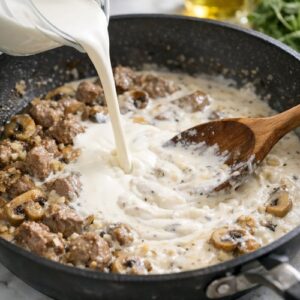
- Reduce the heat to low. This is important—cream can break if the heat is too high. Pour in the heavy cream and stir gently but thoroughly to combine everything. The mixture will look luxurious and rich. Cook for 1-2 minutes over low heat, just until warmed through. You're not trying to thicken the cream here; you're just bringing all the temperatures to the same level so everything melds together. The sauce should smell savory, slightly meaty, and irresistibly creamy.
Step 8: Combine Pasta with Sauce
- Add the cooked fettuccine directly to the cream sauce in the skillet. Using two wooden spoons, gently toss the pasta, lifting and turning it so every strand gets coated. This takes about 1-2 minutes. The pasta will absorb some of the sauce immediately, so the mixture might look thicker than you expect. This is where your reserved pasta water comes in.
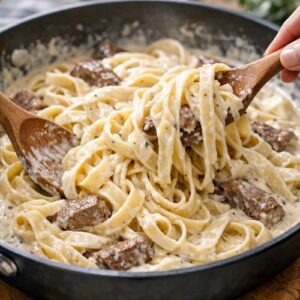
Step 9: Finish with Cheese and Consistency
- Remove the skillet from heat and add the grated Parmigiano-Reggiano cheese, along with the nutmeg. Stir gently and continuously until the cheese melts completely and incorporates into the sauce. This takes about 45-60 seconds. The mixture might look slightly thick at this point. Begin adding your reserved pasta water, 2-3 tablespoons at a time, stirring gently. You're looking for a sauce that clings to the pasta but flows slightly on the plate—not pasty, not soupy. Most people need about ¼ to ½ cup of the pasta water, but every stove is different. Taste and adjust salt and pepper as needed. Remember that Parmigiano-Reggiano is already salty, so taste before adding more salt.
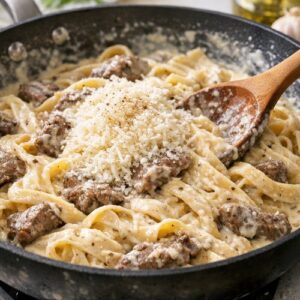
Step 10: Garnish and Serve Immediately
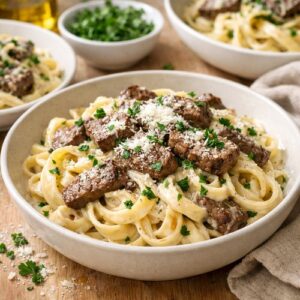
- Stir in most of the fresh parsley, reserving some for garnish. Divide the pasta among four shallow bowls or plates. Top each with a small pinch of the reserved parsley and an extra grating of Parmigiano-Reggiano. Serve immediately while the pasta is hot and the sauce is at its creamiest. This dish doesn't hold well once plated, so have everyone ready to eat when you're ready to serve.
Notes
- Toast your Italian seasoning - Sprinkle it into the hot pan with the stock for 15 seconds before adding the cream. This blooms the flavors and makes them more vibrant. It's an extra 15 seconds that makes a noticeable difference.
- Use a microplane for nutmeg - A tiny whisper of fresh nutmeg in a cream sauce is transformative. Pre-ground nutmeg tastes dusty by comparison. If you don't have a microplane, a fine grater works too.
- Warm your bowls - While you're finishing the sauce, run hot water into your serving bowls, then drain before plating. Warm bowls keep the dish at the perfect temperature longer.
- Don't rush the beef browning - Those golden-brown bits are flavor compounds developed through the Maillard reaction. They're not negotiable. Give the beef time to develop color.
- Taste as you go - Salt and pepper need adjustment at each stage. What tastes right when you add the stock might need tweaking once you add cream. This is normal and expected.