This post contains affiliate links. As an Amazon Associate I earn from qualifying purchases.
There’s something about serving a beautiful piece of flank steak that makes any weeknight feel special. I’ve learned that this lean cut transforms into something truly tender and restaurant-worthy when you combine a hot sear with a quick oven finish and a silky wine sauce. Pair this with roasted vegetables or creamy mashed potatoes, and you’ve got a meal that feels fancy but comes together in under 30 minutes. If you’re looking for other impressive beef dishes, check out my Pioneer Woman London Broil Recipe for another crowd-pleaser.
The Day I Discovered Flank Steak Magic
My mother-in-law handed me a package of flank steak at a family gathering back in 2019 when I was just beginning to record our cherished family recipes. I’ll be honest—I was intimidated. This thin, lean cut looked nothing like the tender steaks I grew up eating. But she smiled and said, “Trust the method, not the meat.”
That night, I seared it hot, finished it in the oven, and created a pan sauce that made everyone at the table go quiet. My husband actually asked for seconds. From that moment, I became obsessed with understanding why this technique worked so beautifully and how I could teach it to other home cooks who felt as nervous as I did.
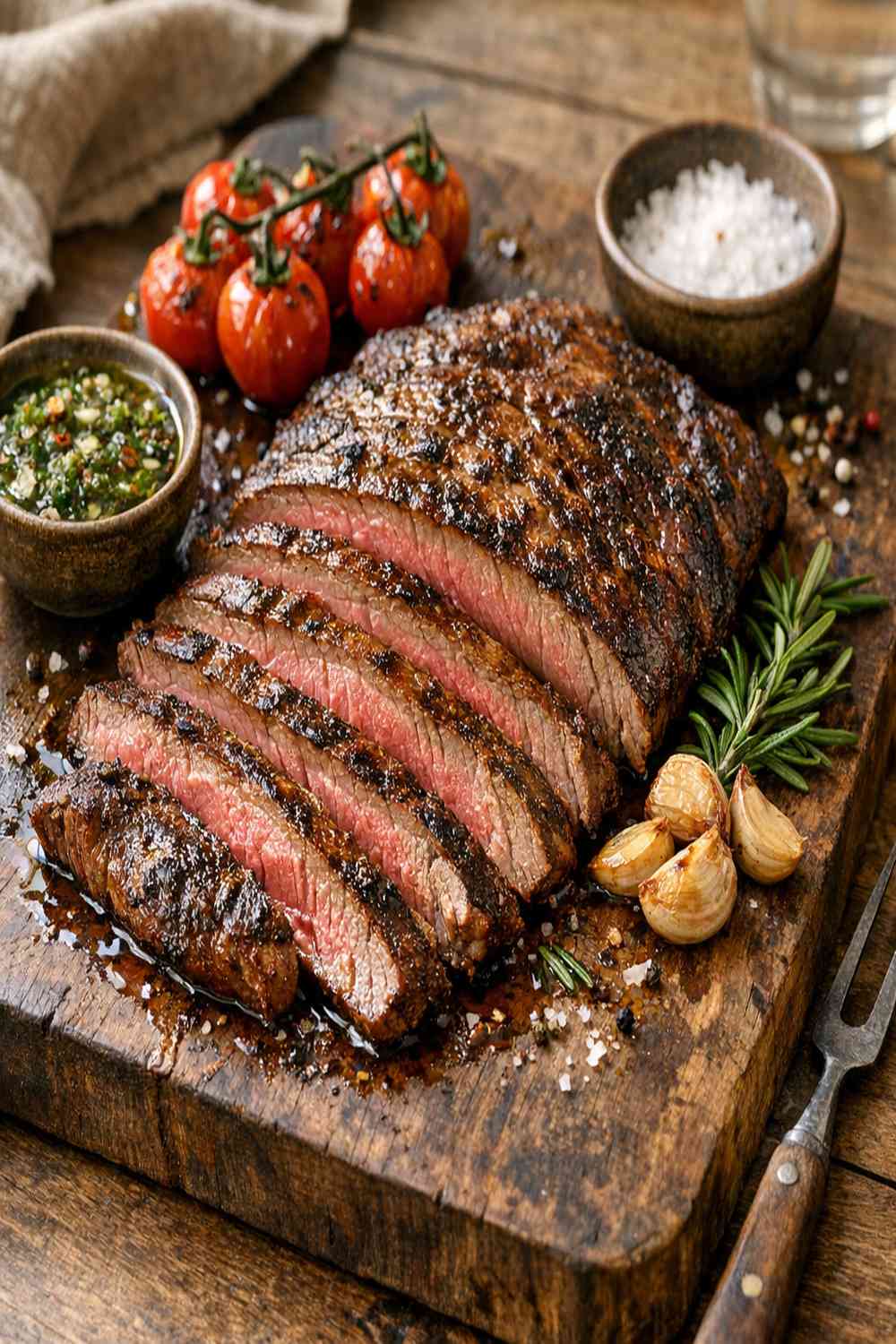
What is Flank Steak In Oven Recipe?
Flank steak is a lean, flavorful cut from the abdominal muscles of the beef. It’s naturally thin (about ½ inch thick when you divide it into portions) and packed with deep, beefy flavor. The magic happens when you understand that this cut doesn’t need hours in the oven—it needs a screaming-hot sear followed by just a few minutes of gentle oven heat to reach that perfect medium-rare.
This recipe divides a 2-pound flank steak into four elegant portions, sears them hard in a cast iron skillet, finishes them in a 400-degree oven, and tops everything with a reduced white wine pan sauce infused with garlic and fresh herbs. The result is a dish that tastes like it came from a fine dining kitchen but uses equipment you already have at home.
What makes this method special is the combination of high-heat searing (which creates that gorgeous brown crust) and the brief oven finish (which ensures even, gentle cooking throughout). The pan sauce captures all those caramelized bits and wine-soaked flavors, bringing everything together in a unified, restaurant-quality dish.
Why You’ll Love This Flank Steak In Oven Recipe
- Faster than you think – From raw steak to plated dinner in about 25 minutes, making this perfect for busy weeknights when you want something that feels special without the stress.
- Incredibly lean protein – A 3-ounce serving provides over 25 grams of protein with minimal fat, making this an excellent choice if you’re focused on nutrition without sacrificing flavor.
- Teaches you essential cooking skills – You’ll master high-heat searing, oven finishing, pan sauce creation, and resting meat properly—techniques that apply to countless other recipes.
- Elegant enough for company – This looks impressive on a plate and tastes restaurant-quality, yet the technique is simple enough that you won’t stress when guests are coming.
- Works with standard kitchen equipment – No special tools needed; just a cast iron skillet, an oven, and a thermometer make this achievable for every home cook.
- Naturally pairs with countless sides – The savory, wine-forward sauce complements roasted vegetables, creamy starches, simple salads, or grain bowls beautifully.
The Ingredients
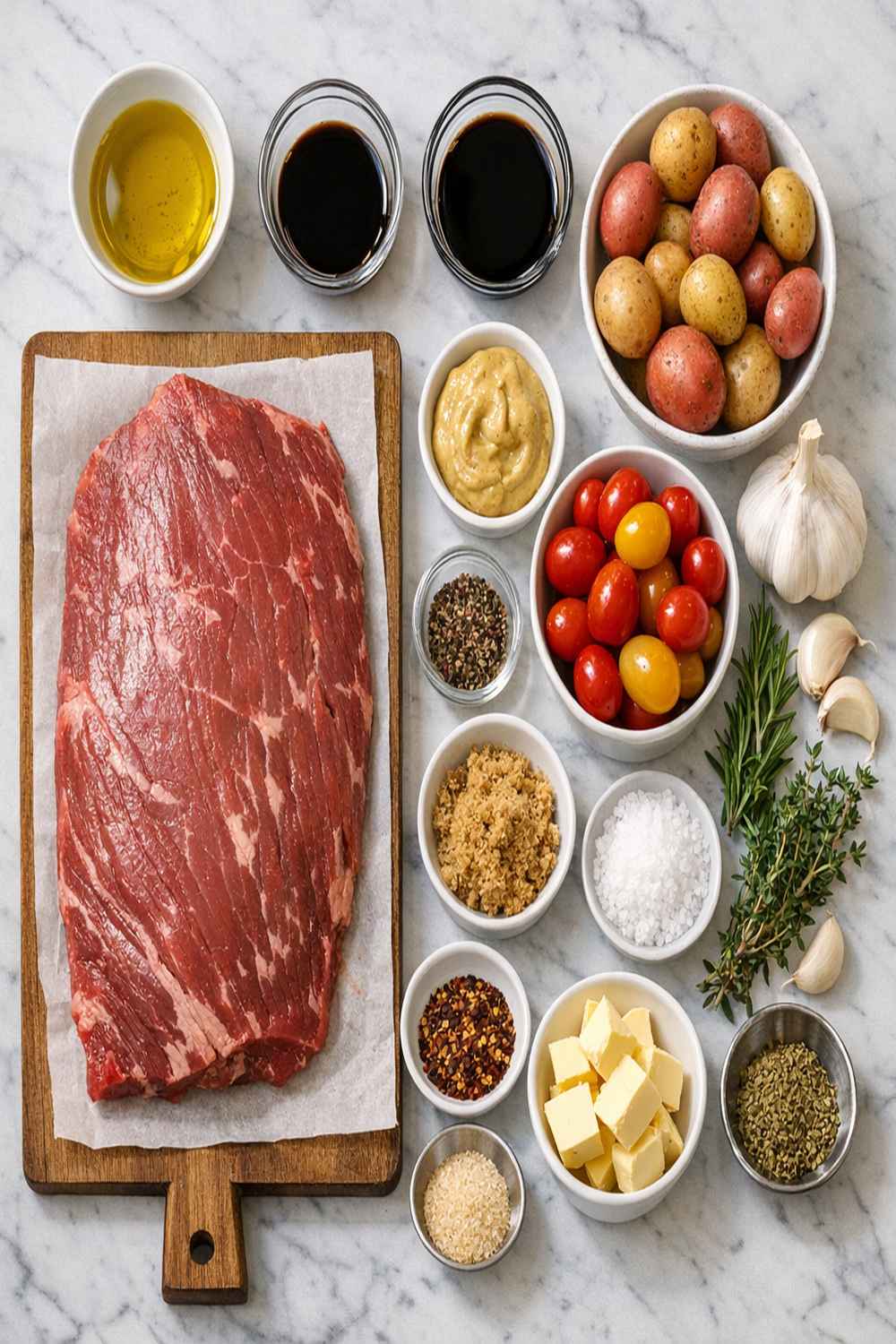
I’ve chosen ingredients that work together to create depth of flavor without requiring a specialty trip to the store. Everything here is accessible, and the quality of each component matters. This recipe makes 4 restaurant-quality portions—perfect for a dinner for two with leftovers, or scaling up easily for company.
- Freshly ground black pepper (always fresh-cracked for better flavor and texture)
- 3 cloves fresh garlic (minced very fine so it distributes evenly into the sauce)
- ¼ teaspoon red pepper flakes (just a whisper, for complexity)
- 2 pounds flank steak (one whole piece, about ½ inch thick)
- 2 teaspoons neutral vegetable oil (helps butter from burning during high-heat searing)
- 1 teaspoon Dijon mustard (optional but recommended—adds subtle depth to the pan sauce)
- Kosher salt (for seasoning the meat thoroughly)
- ¾ cup dry white wine (I use chardonnay, which has enough body without being too oaky)
- 2 tablespoons fresh flat-leaf parsley (chopped just before adding, for brightness)
- 3 tablespoons unsalted butter (divided into portions for searing and finishing)
How to Make Flank Steak In Oven Recipe?
I’ve broken this into clear, manageable steps that focus on the why behind each action. This isn’t just about following directions—it’s about understanding the cooking process so you feel confident and in control. Let’s build something beautiful together.
Step 1: Prepare Your Oven and Mise en Place
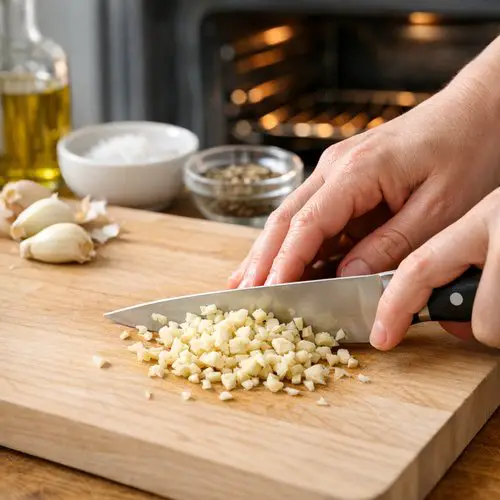
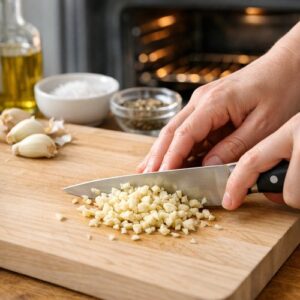
Begin by positioning your oven rack to the center and preheating your oven to 400 degrees Fahrenheit. While the oven heats, mince your garlic cloves very finely—I use a microplane or the smallest setting on my box grater for consistency. Chop your fresh parsley and set it aside in a small bowl. Having everything prepared before you touch the steak means you won’t be scrambling once things get hot and fast.
Step 2: Prepare Your Flank Steak
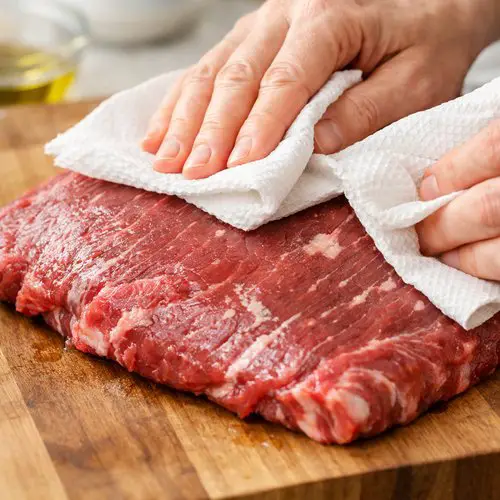
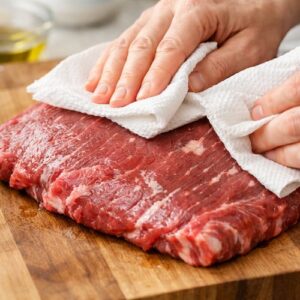
Remove your flank steak from the refrigerator and pat it completely dry using paper towels. Moisture is the enemy of browning—wet meat steams instead of sears. Divide the steak into four equal portions by cutting perpendicular to the grain (this matters for tenderness later). Season each portion generously on both sides with kosher salt and freshly ground black pepper. I use about ¼ teaspoon salt per side per portion. Don’t be shy—proper seasoning penetrates the meat and enhances its natural flavors.
Step 3: Heat Your Skillet and Begin Searing
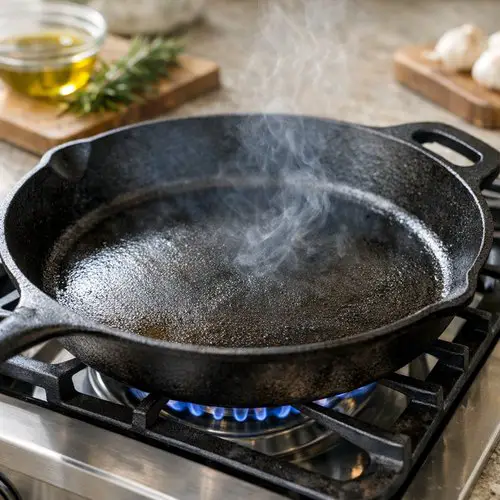
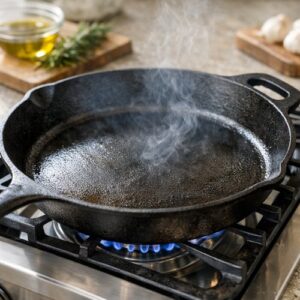
Place a large cast iron skillet over medium-high heat and let it sit undisturbed for about 2 minutes until it’s properly heated. You’ll know it’s ready when a drop of water immediately sizzles and evaporates. Add the vegetable oil to the hot pan and let it shimmer for about 30 seconds. Add 1 tablespoon of butter and watch it foam slightly—this is exactly what you want.
Carefully place your seasoned steak portions into the pan. You should hear an immediate, confident sizzle. Do not move them. Let them sit undisturbed for exactly 3 minutes while they develop a golden-brown crust. This Maillard reaction creates the flavor foundation of your dish.
Step 4: Sear the Second Side
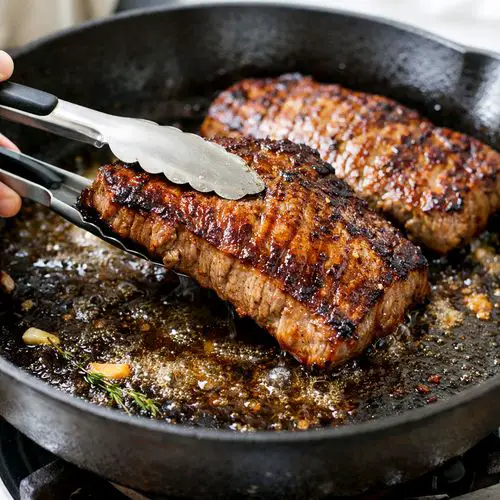
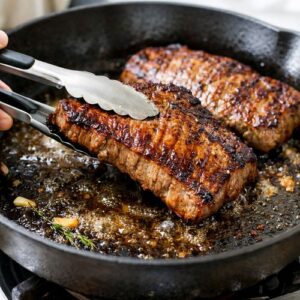
Using tongs, flip each steak portion carefully and sear the other side for another 3 minutes until both sides are evenly golden-brown. Your pan should still sound sizzly and confident. If the heat has dropped, you’ll know the steaks have released enough moisture that browning has resumed. This is perfect.
Step 5: Move to the Oven for Gentle Finishing
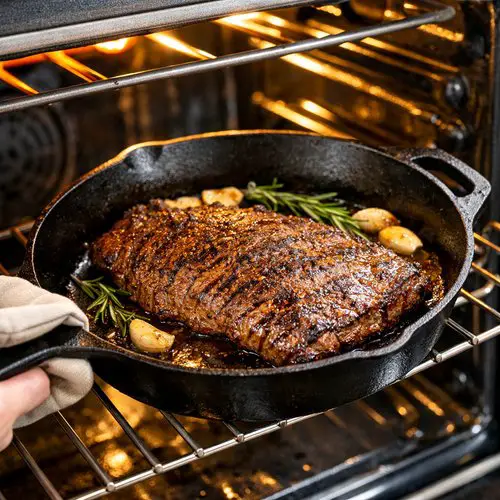
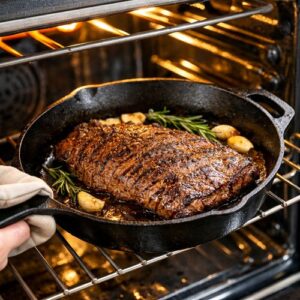
Once both sides are seared beautifully, transfer the entire cast iron skillet directly into your preheated 400-degree oven. Bake for exactly 3 to 4 minutes. Your goal is to reach an internal temperature of 125 degrees Fahrenheit (medium-rare) when measured with an instant-read thermometer inserted into the thickest portion of a steak. The oven’s gentle, surrounding heat ensures even cooking without overdrying this lean meat.
Step 6: Rest Your Steaks and Begin the Sauce
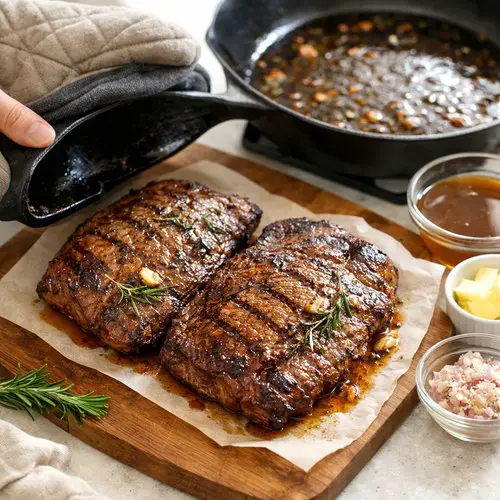
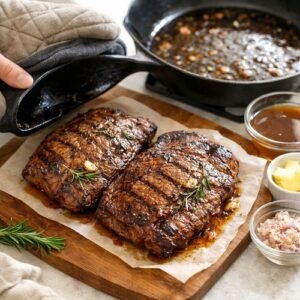
Carefully remove the cast iron skillet from the oven—the handle will be extremely hot, so use a kitchen towel or thick oven mitt. Transfer the steaks to a clean plate and let them rest for 5 minutes. This resting period is non-negotiable; it allows the juices to redistribute throughout the meat, keeping it tender and moist when you slice it.
While the steaks rest, place your skillet back on the stovetop over medium-low heat. Add another tablespoon of butter and your minced garlic. Sauté for 1 to 2 minutes until the garlic becomes fragrant and just barely golden—don’t let it brown or it will taste bitter.
Step 7: Deglaze and Reduce
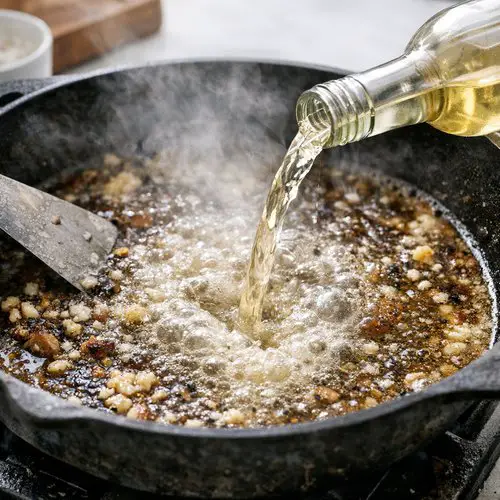
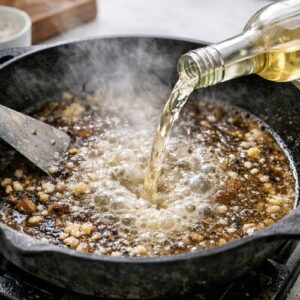
Pour your dry white wine into the skillet with the garlicky butter. You’ll immediately hear a sizzle as the wine hits the hot pan. Add any juices that have accumulated on the plate from your resting steaks—this is liquid gold for flavor. Increase the heat to medium-high and bring the mixture to a gentle boil.
Let the wine reduce for about 5 minutes, using a wooden spoon to scrape up all the browned, caramelized bits stuck to the bottom of the pan. These fond particles contain concentrated beef and butter flavors. Watch the liquid decrease in volume and become slightly thickened and glossy. You’ll know it’s ready when you can run a spoon through the sauce and it leaves a brief trail before flowing back together.
Step 8: Finish the Sauce and Plate
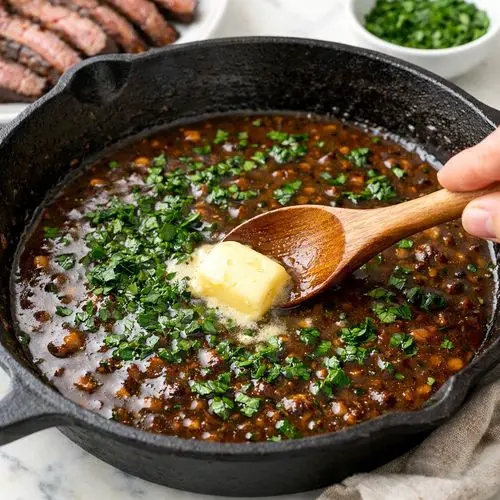
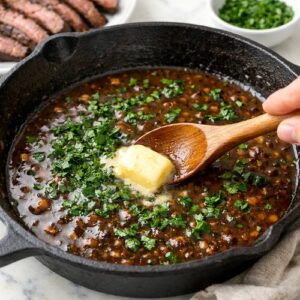
Remove the skillet from heat and stir in your final tablespoon of butter and the fresh parsley. The butter creates a silky, emulsified finish. Taste the sauce and season with additional salt and pepper as needed. The wine should be the dominant flavor, with garlic as a supporting player and butter adding richness.
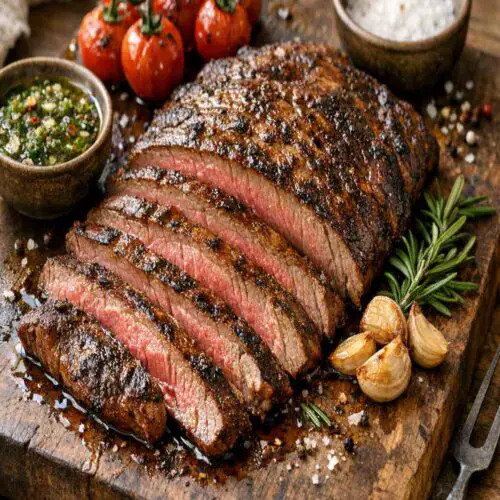
Slice each steak portion against the grain into ¼-inch strips. This matters tremendously for tenderness. Arrange the slices on a plate, spoon the wine pan sauce generously over the top, and serve immediately while everything is hot. Good food is a good mood!
Tips and Tricks
- Slice against the grain – Flank steak has visible muscle fibers running in one direction. Slicing perpendicular to these fibers breaks them apart, making each bite tender. If you slice with the grain, the meat will be chewy no matter how perfect your cooking was.
- Use an instant-read thermometer – This is how I guarantee success for my readers. Don’t rely on touch or guessing. A $15 instant-read thermometer removes all anxiety about overcooking. I check the thickest part of the steak to ensure even doneness.
- Don’t skip the resting period – I know five minutes feels long when you’re hungry, but resting allows muscle fibers to relax and reabsorb juices. Skipping this step will result in a drier steak regardless of temperature. The difference is genuinely noticeable.
- Pat the steak completely dry – Any surface moisture prevents the crust from forming. I use paper towels to blot every surface, then set it aside for 2 minutes before seasoning. This extra dryness creates that restaurant-quality sear.
- Keep your wine nearby when deglazing – Pour it slowly so the sizzle doesn’t startle you. I do this over medium-high heat so the wine immediately begins reducing rather than just sitting in the pan.
- Don’t add the parsley until the very end – Fresh parsley cooked for more than a minute loses its brightness and flavor. I add it after removing from heat so it stays vibrant and fresh-tasting.
- Make the sauce in the same pan as the steak – Those browned bits clinging to the cast iron are pure flavor. They emulsify into the sauce and create depth you can’t replicate starting in a clean pan.
- Let your cast iron skillet get properly hot – Don’t rush this step. A properly heated pan means a proper sear. If your pan isn’t hot enough, the meat will release moisture and steam rather than brown.
Expert’s Nutritional Tip
As a registered dietitian, I want to highlight something special about flank steak: it’s one of the leanest cuts of beef while maintaining excellent flavor. A 3-ounce cooked serving provides approximately 26 grams of complete protein with only about 6 grams of fat, according to USDA nutrition data. This makes it exceptional for anyone watching calories while prioritizing satiety.
The wine in the pan sauce adds virtually no significant calories but contributes complex flavor and acidity that helps your body absorb the iron in the beef more effectively. I always tell clients that flank steak paired with a vegetable-rich side dish creates a perfectly balanced plate with impressive nutritional density. You’re getting lean protein, real fat for nutrient absorption, and the polyphenols from the wine—it’s genuinely healthy eating that tastes indulgent.
Can I Store Flank Steak In Oven Recipe?
Yes, and leftovers are actually wonderful with this dish. Store cooked steak and sauce together in an airtight container in the refrigerator for up to 3 to 4 days. The sauce actually helps keep the meat moist during storage. To reheat, I gently warm everything together in a skillet over medium-low heat with a splash of water or beef broth if it seems dry. The steak will be softer than it was fresh, which some people prefer.
You can also freeze cooked steak and sauce together for up to 2 to 3 months. Thaw overnight in the refrigerator before reheating. I don’t recommend freezing uncooked flank steak using this method since the texture can become stringy.
For meal prep, I often cook the steak and sauce, then store them separately so I can slice the steak fresh and reheat the sauce gently. This gives you maximum flexibility for using leftovers in salads, grain bowls, or sandwiches throughout the week.
Nutrition Information
Based on USDA data, a single serving of this recipe (one sliced steak portion with sauce) provides approximately 285 calories, 26 grams of protein, 18 grams of fat, and 2 grams of carbohydrates. The protein-to-calorie ratio is excellent—you’re getting significant protein without excessive calories, making this ideal for anyone focusing on body composition or simply wanting a satisfying, nutrient-dense meal.
The wine reduction contributes minimal calories (alcohol mostly cooks off during the 5-minute reduction) while adding tremendous flavor and some beneficial polyphenols. The butter provides fat-soluble vitamins and cholesterol needed for hormone production. This is nutrient-dense, real food that your body actually recognizes and efficiently uses.
What Can I Serve With Flank Steak In Oven Recipe?
The savory, wine-forward sauce pairs beautifully with sides that either complement its richness or provide textural contrast. Here are my favorite combinations that I’ve tested thoroughly with this dish. If you’re looking for more elegant beef preparations, my Carne Asada Pizza Recipe offers another impressive way to use quality beef for special occasions.
- Creamy mashed potatoes or cauliflower puree – The starchy richness plays beautifully with the wine sauce, and you can spoon that precious sauce right over the top. This is comfort meets elegance.
- Roasted root vegetables – Carrots, parsnips, and Brussels sprouts caramelize in the oven alongside your steak. The sweetness balances the wine’s acidity perfectly.
- Herbed rice pilaf – A simple rice cooked in broth with fresh herbs soaks up the sauce and creates a complete, balanced plate without feeling heavy.
- Sautéed mushrooms and garlic – Earthy mushrooms echo the umami in the beef and sauce. This is my personal favorite combination because the flavors truly sing together.
- Simple green salad with lemon vinaigrette – If you want something lighter, a crisp salad provides fresh, acidic contrast that cuts through the richness of the sauce.
- Asparagus or green beans with garlic – Fresh, quick-cooking vegetables that won’t overshadow your beautiful steak.
Make-Ahead Guide
This dish works wonderfully for entertaining because so much can be prepared in advance. Here’s my professional approach to making this stress-free for company dinners.
The morning of your dinner: Remove your flank steak from the freezer and place it in the refrigerator to thaw completely. This slow thaw ensures even cooking. Open your wine bottle and let it sit out—it’s fine at room temperature for cooking. Mince your garlic and chop your parsley, storing each in small bowls covered with plastic wrap. Pat your steak dry and cut it into portions, then season and let it sit in the refrigerator until 20 minutes before cooking. Cold steak brings down pan temperature slightly, which actually works in your favor for even cooking.
30 minutes before serving: Preheat your oven, get your cast iron skillet heating, and make sure your thermometer and all utensils are within arm’s reach. Having a clean, organized workspace means you can focus on cooking rather than scrambling for supplies.
If you’re cooking for a crowd: Double the recipe but increase your pan-searing time by about 1 minute per side to ensure the added meat doesn’t cool your skillet too much. You’ll need a large skillet or to work in batches. I recommend batching—it actually ensures better browning than crowding the pan.
Substitutes
- Skip the white wine or use red wine instead – If you don’t keep wine on hand, beef broth works fine (though it lacks the acidity and complexity). Red wine creates a more robust sauce; just expect a deeper color and slightly earthier flavor profile. Both work beautifully with flank steak.
- Use salted butter if unsalted isn’t available – Just reduce the salt slightly when seasoning your steak and sauce, since the butter will contribute saltiness. I prefer unsalted because I like complete control, but real life happens and salted butter works fine.
- Fresh thyme or chives instead of parsley – Any fresh herb adds brightness. Thyme is more herbaceous, while chives are milder. Avoid dried herbs here—fresh is genuinely worth it for finishing a dish this elegant.
- Sirloin steak or skirt steak instead of flank – Both are lean, flavorful cuts that benefit from the same cooking method. Sirloin might need 1 extra minute in the oven; skirt cooks slightly faster since it’s thinner. The method applies beautifully to similar cuts.
- Finish without butter for a lighter sauce – If you’re managing fat intake, skip the final tablespoon of butter. The sauce will be less silky but still delicious, with the wine and pan-drippings creating good flavor on their own.
Common Mistakes to Avoid
Mistake 1: Skipping the resting period. I see home cooks plate their steak immediately after pulling it from the oven because they’re excited. But resting is when the magic truly happens. Muscle fibers relax and reabsorb their juices. Without this pause, those juices end up on your plate instead of in your meat. I promise five minutes is worth the wait.
Mistake 2: Not patting the steak dry. A wet steak will steam instead of sear, giving you a gray crust instead of that beautiful golden-brown. I’ve seen people lose faith in this recipe because they didn’t dry the meat properly. Make drying your steak non-negotiable.
Mistake 3: Using a pan that isn’t hot enough. If your pan isn’t properly preheated, the steak releases moisture and you get a sad steam effect instead of a confident sear. Invest 2 minutes in proper preheating. The pan should be so hot that a drop of water immediately disappears.
Mistake 4: Overcooking the wine reduction. Some people reduce the wine until it’s syrupy, which concentrates the alcohol taste unpleasantly and makes the sauce overly intense. I stop when the sauce is slightly thickened but still flows freely. The goal is balance, not intensity.
Seasonal Variations
Spring version: Replace the parsley with fresh tarragon or chervil, and add a handful of fresh peas to your pan sauce in the last minute of reduction. Serve alongside spring vegetables like baby carrots and new potatoes. The lighter herbs complement the steak beautifully without the heavy richness of winter flavors.
Summer version: Substitute the white wine with dry rosé for a lighter flavor profile. Add fresh mint or basil to the sauce instead of parsley, and pair with grilled vegetables and a crisp salad. The rosé keeps the dish feeling light and seasonal while maintaining the sophisticated sauce concept.
Fall version: Use a buttery chardonnay (slightly richer than a bright white) and add a teaspoon of whole grain mustard to the pan sauce for depth. Serve with roasted root vegetables and mushrooms. The earthier wines and sides feel natural for autumn entertaining.
Winter version: Stick with a full-bodied white wine and add a small pinch of fresh thyme to your pan sauce. Serve with rich sides like creamed spinach or truffle mashed potatoes. The richer accompaniments celebrate the heavier feel of winter meals.
Flank Steak In Oven Recipe
Ingredients
- Freshly ground black pepper always fresh-cracked for better flavor and texture
- 3 clove fresh garlic minced very fine so it distributes evenly into the sauce
- ¼ teaspoon red pepper flakes just a whisper, for complexity
- 2 pound flank steak one whole piece, about ½ inch thick
- 2 teaspoon neutral vegetable oil helps butter from burning during high-heat searing
- 1 teaspoon Dijon mustard (optional but recommended
- Kosher salt for seasoning the meat thoroughly
- ¾ cup dry white wine I use chardonnay, which has enough body without being too oaky
- 2 tablespoon fresh flat-leaf parsley chopped just before adding, for brightness
- 3 tablespoon unsalted butter divided into portions for searing and finishing
Instructions
Step 1: Prepare Your Oven and Mise en Place
- Begin by positioning your oven rack to the center and preheating your oven to 400 degrees Fahrenheit. While the oven heats, mince your garlic cloves very finely—I use a microplane or the smallest setting on my box grater for consistency. Chop your fresh parsley and set it aside in a small bowl. Having everything prepared before you touch the steak means you won't be scrambling once things get hot and fast.
Step 2: Prepare Your Flank Steak
- Remove your flank steak from the refrigerator and pat it completely dry using paper towels. Moisture is the enemy of browning—wet meat steams instead of sears. Divide the steak into four equal portions by cutting perpendicular to the grain (this matters for tenderness later). Season each portion generously on both sides with kosher salt and freshly ground black pepper. I use about ¼ teaspoon salt per side per portion. Don't be shy—proper seasoning penetrates the meat and enhances its natural flavors.
Step 3: Heat Your Skillet and Begin Searing
- Place a large cast iron skillet over medium-high heat and let it sit undisturbed for about 2 minutes until it's properly heated. You'll know it's ready when a drop of water immediately sizzles and evaporates. Add the vegetable oil to the hot pan and let it shimmer for about 30 seconds. Add 1 tablespoon of butter and watch it foam slightly—this is exactly what you want. Carefully place your seasoned steak portions into the pan. You should hear an immediate, confident sizzle. Do not move them. Let them sit undisturbed for exactly 3 minutes while they develop a golden-brown crust. This Maillard reaction creates the flavor foundation of your dish.
Step 4: Sear the Second Side
- Using tongs, flip each steak portion carefully and sear the other side for another 3 minutes until both sides are evenly golden-brown. Your pan should still sound sizzly and confident. If the heat has dropped, you'll know the steaks have released enough moisture that browning has resumed. This is perfect.
Step 5: Move to the Oven for Gentle Finishing
- Once both sides are seared beautifully, transfer the entire cast iron skillet directly into your preheated 400-degree oven. Bake for exactly 3 to 4 minutes. Your goal is to reach an internal temperature of 125 degrees Fahrenheit (medium-rare) when measured with an instant-read thermometer inserted into the thickest portion of a steak. The oven's gentle, surrounding heat ensures even cooking without overdrying this lean meat.
Step 6: Rest Your Steaks and Begin the Sauce
- Carefully remove the cast iron skillet from the oven—the handle will be extremely hot, so use a kitchen towel or thick oven mitt. Transfer the steaks to a clean plate and let them rest for 5 minutes. This resting period is non-negotiable; it allows the juices to redistribute throughout the meat, keeping it tender and moist when you slice it. While the steaks rest, place your skillet back on the stovetop over medium-low heat. Add another tablespoon of butter and your minced garlic. Sauté for 1 to 2 minutes until the garlic becomes fragrant and just barely golden—don't let it brown or it will taste bitter.
Step 7: Deglaze and Reduce
- Pour your dry white wine into the skillet with the garlicky butter. You'll immediately hear a sizzle as the wine hits the hot pan. Add any juices that have accumulated on the plate from your resting steaks—this is liquid gold for flavor. Increase the heat to medium-high and bring the mixture to a gentle boil. Let the wine reduce for about 5 minutes, using a wooden spoon to scrape up all the browned, caramelized bits stuck to the bottom of the pan. These fond particles contain concentrated beef and butter flavors. Watch the liquid decrease in volume and become slightly thickened and glossy. You'll know it's ready when you can run a spoon through the sauce and it leaves a brief trail before flowing back together.
Step 8: Finish the Sauce and Plate
- Remove the skillet from heat and stir in your final tablespoon of butter and the fresh parsley. The butter creates a silky, emulsified finish. Taste the sauce and season with additional salt and pepper as needed. The wine should be the dominant flavor, with garlic as a supporting player and butter adding richness. Slice each steak portion against the grain into ¼-inch strips. This matters tremendously for tenderness. Arrange the slices on a plate, spoon the wine pan sauce generously over the top, and serve immediately while everything is hot. Good food is a good mood!
Notes
FAQs
Can I make this recipe with a different cut of beef?
Absolutely. This method works beautifully with sirloin steak, skirt steak, or even thin-cut ribeye. The key is using a cut that’s relatively thin (½ inch to ¾ inch) so it cooks evenly through high-heat searing and brief oven time. Thicker cuts need longer oven time and different temperature management. I’d recommend adding 2-3 minutes to your oven time for thicker steaks, monitoring with a thermometer until you reach your target temperature.
What temperature should my steak actually reach?
I recommend 125 degrees Fahrenheit for medium-rare, which is where flank steak truly shines—tender, juicy, and deeply flavored. If you prefer medium, aim for 135 degrees. Remember that the steak continues cooking slightly while resting, so removing it at 125 often results in a 130-degree final temperature. Medium-well (145 degrees) is possible but flank’s leanness means it risks becoming dry, so I don’t recommend going past 140 degrees with this particular cut.
Can I make the pan sauce in advance?
You can make it while your steak rests, but I don’t recommend making it hours ahead. Wine-based pan sauces are best fresh because the acidity and bright flavors start to flatten over time. However, you can certainly reduce the wine while your steak cooks, then just finish with butter and parsley when you plate. This means everything is warm and timed perfectly.
My steak came out tough—what did I do wrong?
The most likely culprit is either overcooking (exceeding 135 degrees) or slicing with the grain instead of against it. Flank steak has very pronounced muscle fibers running in one direction—slicing perpendicular to these makes an enormous difference in tenderness. If the steak itself was truly tough despite being at the right temperature and sliced correctly, the meat might have been old or not properly stored before cooking. Always check expiration dates and ensure your beef came from a quality source.
What if I don’t want to use wine?
You can absolutely make this without wine. Use beef broth instead, which creates a savory pan sauce that’s delicious but less complex. Add an extra teaspoon of Dijon mustard or a splash of Worcestershire sauce to compensate for the acidity and complexity wine provides. The pan sauce won’t have that characteristic wine brightness, but it will still be tasty. Some people actually prefer beef-forward sauces without wine, so don’t feel like you’re compromising by skipping it.
More Recipes You’ll Love
- Pioneer Woman London Broil Recipe – Another elegant beef preparation that uses similar high-heat searing and pan sauce techniques for an impressive meal.
- Slow Cooker Beef Ragu with Pappardelle – A completely different beef preparation using braising instead of searing, perfect for when you want restaurant quality without active cooking time.
- Carne Asada Pizza Recipe – A fun, unexpected way to celebrate quality beef with the same confident searing techniques you’ve learned here.
- Cardiff Crack Recipe – A completely different flavor profile that still showcases how to make everyday ingredients feel special through technique and care.
- This Homemade Ground Recipe – Worth adding to your recipe collection.
- My Weeknight Chicken Recipe – Worth adding to your recipe collection.
- This Easy Lettuce Recipe – Worth adding to your recipe collection.
- This Easy Chicken Dinner – Worth adding to your recipe collection.
- This Easy Chicken Dinner – Worth adding to your recipe collection.
I genuinely hope this flank steak recipe becomes a regular part of your cooking rotation. When you master this technique—the confident sear, the perfect timing, the silky sauce—you’ll find yourself reaching for it again and again. It’s the kind of dish that feels fancy enough for company but simple enough to make on a random Tuesday when you want to feel good about dinner.
Remember, cooking isn’t about perfection; it’s about care and intention. Each time you make this, you’ll learn something new about your stove, your pan, your ingredients. That knowledge accumulates into genuine confidence in the kitchen. I’m rooting for you. Good food is a good mood!
- Zoes Kitchen Steak Kabobs Recipe
- Texas Roadhouse Steak Seasoning Recipe
- Outback Steakhouse Steak Seasoning Recipe
- Mcdonalds Steak Egg And Cheese Bagel Recipe

My name is Lori Walker. I’m a registered dietitian, food blogger and food enthusiast. I share easy healthy, delicious recipes on my blog and review necessary kitchen items. The recipes I share take less… Read more