This post contains affiliate links. As an Amazon Associate I earn from qualifying purchases.
Gordon Ramsay-style lasagne is a classic lasagne al forno: a slow-simmered beef and pork ragù layered with silky white sauce, pasta sheets, mozzarella, and Parmesan. It tastes rich, savory, and creamy, with a golden, bubbling top. Plan on about 2 hours 15 minutes from start to finish, including a rest before slicing.
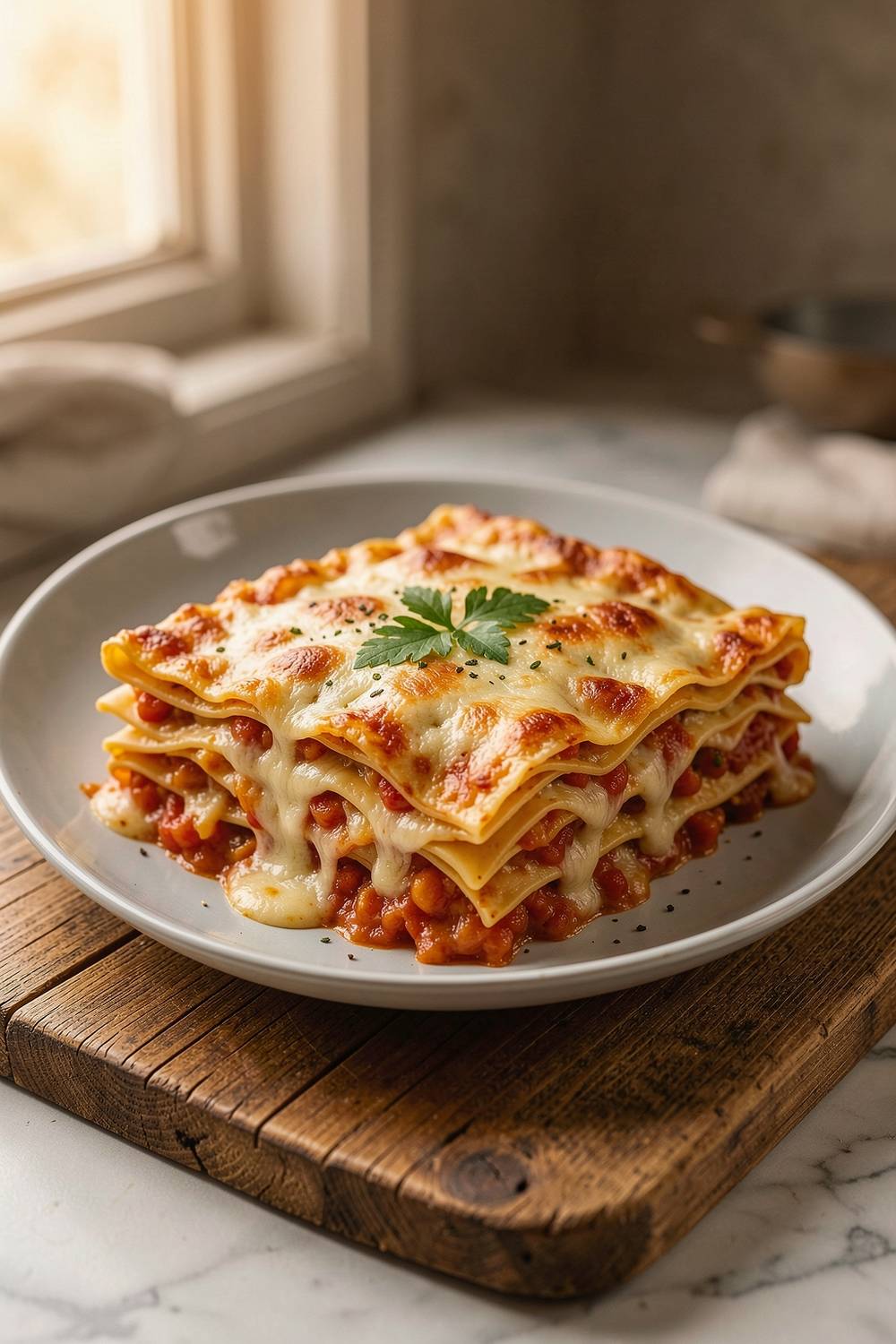
What Makes a Ramsay-Style Lasagne Special?
Good lasagne comes down to three things: a deeply flavored ragù, a smooth white sauce, and patient assembly. Cooks search for the chef’s version because it follows the traditional Italian method instead of the quick “meat sauce plus cheese” shortcut.
The ragù is built on a finely chopped vegetable base, browned meat, tomato purée, red wine, and a long simmer. A splash of milk in the sauce keeps the meat tender. The result is layers that hold together when sliced, not a soupy pile.
A note on accuracy: I’m not reproducing any chef’s published recipe word for word. This is my home-cook version of the same classic style, written so you can make it with standard supermarket ingredients and one oven.
Ingredients
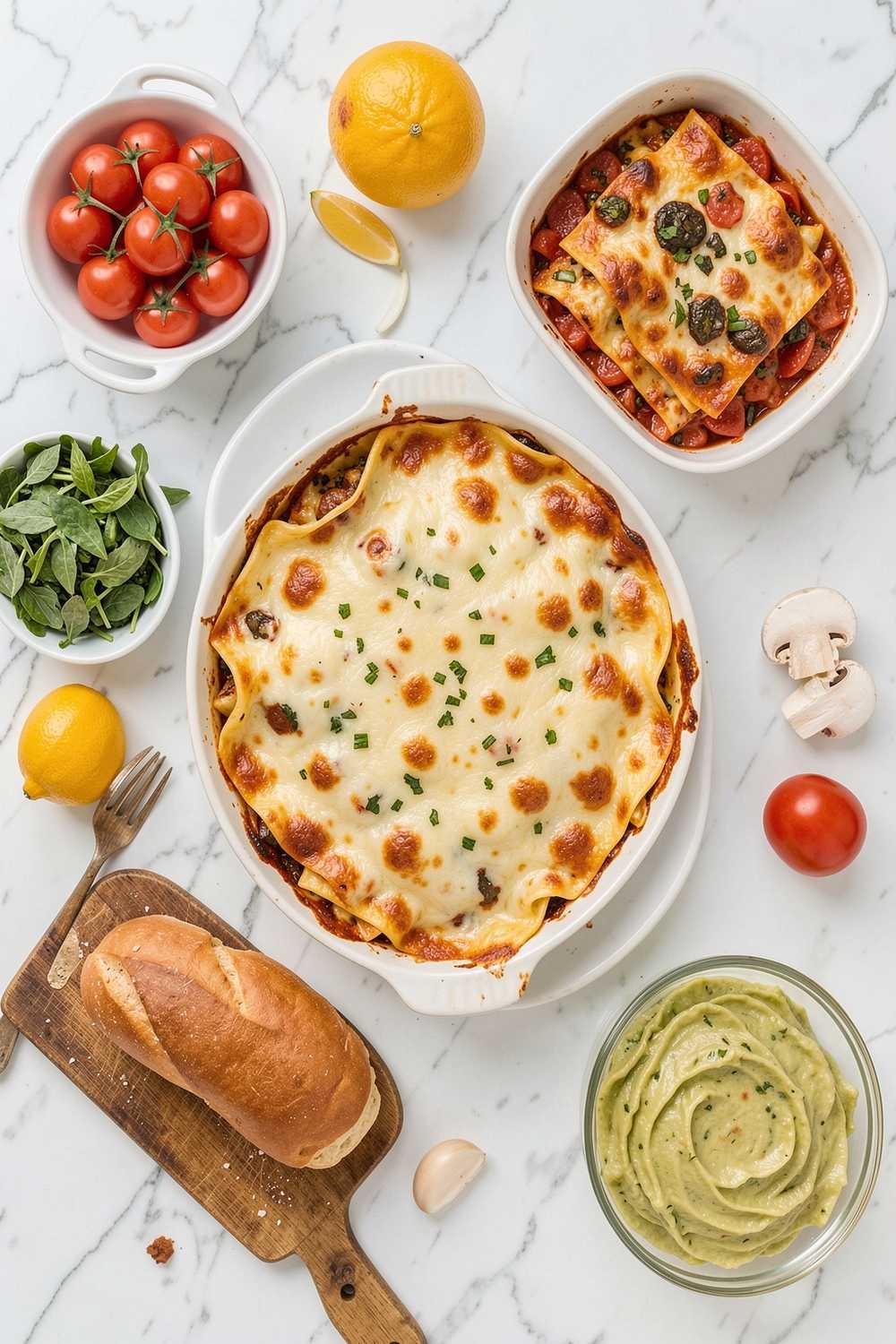
- 2 tbsp olive oil (extra virgin is fine)
- 100 g pancetta, finely diced (smoked bacon works too)
- 1 large onion, finely chopped (about 200 g)
- 1 medium carrot, finely chopped
- 1 celery stick, finely chopped
- 3 cloves garlic, minced
- 500 g beef mince (ground beef, 15-20% fat for best flavor)
- 250 g pork mince (ground pork, or use all beef)
- 2 tbsp tomato purée (tomato paste)
- 150 ml red wine (or extra beef stock)
- 400 g tinned chopped tomatoes (one standard tin)
- 200 ml beef stock (low-sodium if possible)
- 100 ml whole milk (added to the ragù)
- 2 bay leaves (optional but lovely)
- 1 tsp dried oregano (or dried mixed herbs)
- 1 tsp salt (adjust at the end)
- 1/2 tsp black pepper (freshly ground)
- 60 g butter (for the white sauce)
- 60 g plain flour (all-purpose flour)
- 800 ml whole milk (warmed slightly for a smoother sauce)
- 1/4 tsp freshly grated nutmeg (ground works in a pinch)
- 100 g Parmesan, finely grated (divided, plus extra to serve)
- 250 g dried lasagne sheets (about 9-12, no pre-boil type)
- 125 g fresh mozzarella, torn (low-moisture mozzarella melts with less water)
How to Make Gordon Ramsay Lasagne
Step 1: Build the Ragù Base
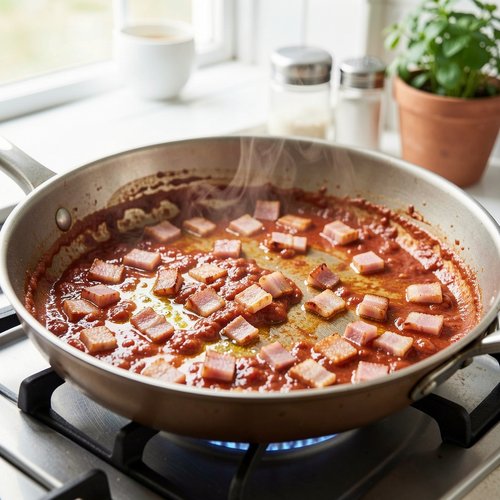
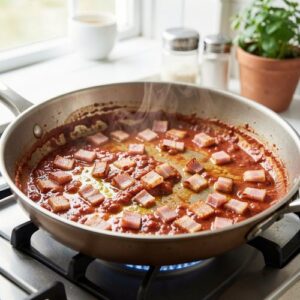
Heat the olive oil in a large, wide pan over medium heat. Add the pancetta and cook for 4-5 minutes until the fat runs and the edges turn golden. Add the onion, carrot, and celery and cook for 8 minutes, stirring often, until soft and sweet but not browned. Stir in the garlic for 1 minute.
Step 2: Brown the Meat and Simmer
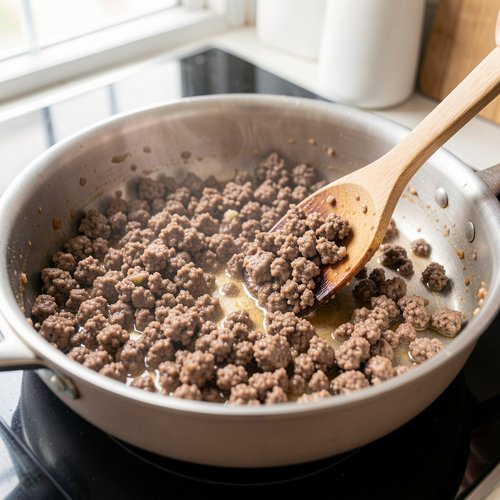
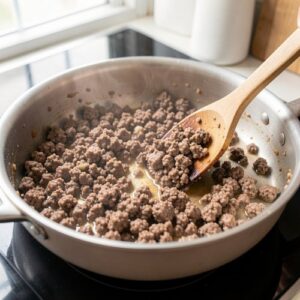
Turn the heat to medium-high and add both minces, breaking them up with a wooden spoon. Cook for 8-10 minutes until the liquid has evaporated and the meat is browned, not grey. Stir in the tomato purée for 1 minute, then pour in the wine and let it bubble until nearly gone.
Add the tomatoes, stock, 100 ml milk, bay leaves, oregano, salt, and pepper. Simmer gently, partly covered, for 60 minutes, stirring now and then. The ragù is ready when it’s thick enough that a spoon dragged across the pan leaves a clear trail. Remove the bay leaves.
Step 3: Make the White Sauce
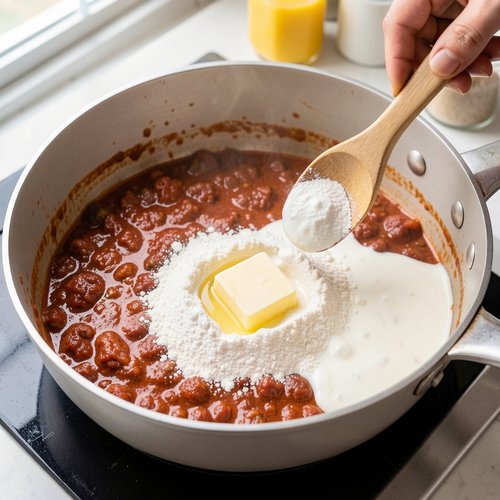
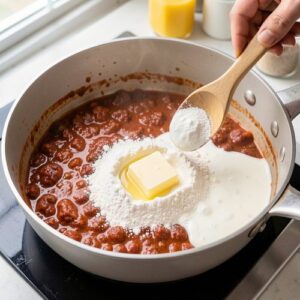
While the ragù simmers, melt the butter in a saucepan over medium-low heat. Whisk in the flour and cook for 2 minutes without browning. Add the warm milk a little at a time, whisking well after each addition so no lumps form.
Simmer for 6-8 minutes, whisking, until it coats the back of a spoon like thick custard. Off the heat, stir in the nutmeg, a pinch of salt, and half the Parmesan (50 g).
Step 4: Assemble the Layers
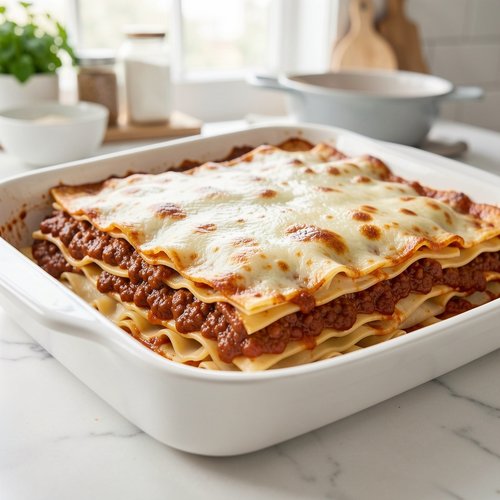
Heat the oven to 190°C (170°C fan / 375°F). Spread a thin layer of ragù over the bottom of a 23 x 33 cm (9 x 13 in) baking dish. Add a layer of pasta sheets, then ragù, a drizzle of white sauce, and a little torn mozzarella.
Repeat for 3-4 layers, ending with pasta. Cover the top with the remaining white sauce, making sure it reaches every corner so the sheets don’t dry out. Scatter over the remaining Parmesan and mozzarella.
Step 5: Bake and Rest
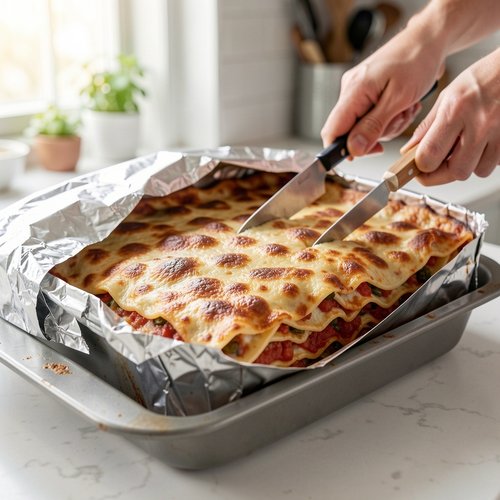
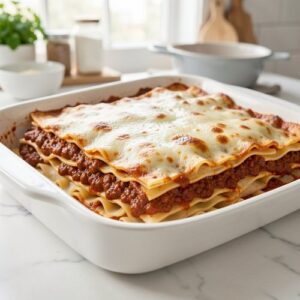
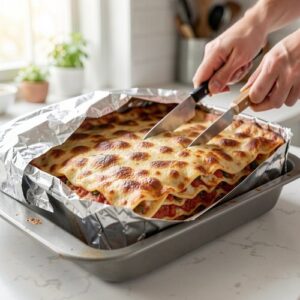
Cover loosely with foil and bake for 25 minutes. Remove the foil and bake 20-25 minutes more until the top is deep golden and the edges bubble. A knife slid into the center should meet no resistance in the pasta.
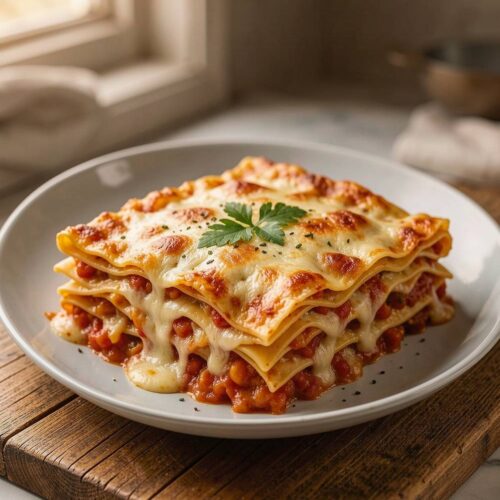
Rest the lasagne for 15 minutes before cutting. This sets the layers so you get neat squares.
How Close Is This to the Gordon Ramsay Version?
The structure matches the classic approach: a soffritto base, a long-simmered meat ragù with wine, béchamel, and a baked cheesy top. The texture and flavor are in the same rich, savory family.
What may differ is the exact meat blend, wine quantity, herbs, and cooking times in his published recipes. I can’t verify those details, so I haven’t copied them. If you want to compare, check his own recipe page and adjust my ragù with his ingredients. Keep the method the same.
Does Gordon Ramsay’s Lasagne Use White Sauce?
A traditional lasagne al forno uses béchamel, and this version does too. It gives the creamy contrast to the rich meat. If you prefer a lighter dish, swap half the béchamel for ricotta mixed with a pinch of nutmeg, though the texture will be less silky.
Make sure the sauce is thick but pourable. If it’s too thin, it will leak into the ragù. If it’s too thick, it won’t spread, so whisk in a little warm milk.
Can You Use Mozzarella in Lasagne Al Forno?
Yes, mozzarella works well and gives a stretchy, golden top. Use a fresh ball, torn, or low-moisture mozzarella for less water. If you use fresh, pat the pieces dry with a paper towel first.
I keep it to 125 g so it supports the Parmesan instead of overwhelming the sauces. Add more on top if you like a very cheesy crust.
Is There a UK or BBC Good Food Version?
Many UK cooks look for a Ramsay lasagne on sites such as BBC Good Food. I can’t vouch for the exact amounts on any specific page, so check the source if you want his precise recipe. My measurements are metric with US equivalents noted: “mince” means ground meat, and “plain flour” means all-purpose.
The no-pre-boil dried sheets I use are common in UK supermarkets. If you use fresh pasta, shorten the covered baking time by about 5 minutes.
Can You Make It Ahead or Freeze It?
Yes. Assemble the lasagne, cover tightly, and refrigerate for up to 24 hours. Add 10 minutes to the covered baking time if it goes into the oven cold.
Gordon Ramsay Lasagne Recipe
Ingredients
- 2 tbsp olive oil extra virgin is fine
- 100 g pancetta, finely diced smoked bacon works too
- 1 large onion, finely chopped about 200 g
- 1 medium carrot, finely chopped
- 1 celery stick, finely chopped
- 3 clove garlic, minced
- 500 g beef mince ground beef, 15-20% fat for best flavor
- 250 g pork mince ground pork, or use all beef
- 2 tbsp tomato purée tomato paste
- 150 ml red wine or extra beef stock
- 400 g tinned chopped tomatoes one standard tin
- 200 ml beef stock low-sodium if possible
- 100 ml whole milk added to the ragù
- 2 bay leaves optional but lovely
- 1 tsp dried oregano or dried mixed herbs
- 1 tsp salt adjust at the end
- 1/2 tsp black pepper freshly ground
- 60 g butter for the white sauce
- 60 g plain flour all-purpose flour
- 800 ml whole milk warmed slightly for a smoother sauce
- 1/4 tsp freshly grated nutmeg ground works in a pinch
- 100 g Parmesan, finely grated divided, plus extra to serve
- 250 g dried lasagne sheets about 9-12, no pre-boil type
- 125 g fresh mozzarella, torn low-moisture mozzarella melts with less water
Instructions
Step 1: Build the Ragù Base
- Heat the olive oil in a large, wide pan over medium heat. Add the pancetta and cook for 4-5 minutes until the fat runs and the edges turn golden. Add the onion, carrot, and celery and cook for 8 minutes, stirring often, until soft and sweet but not browned. Stir in the garlic for 1 minute.
Step 2: Brown the Meat and Simmer
- Turn the heat to medium-high and add both minces, breaking them up with a wooden spoon. Cook for 8-10 minutes until the liquid has evaporated and the meat is browned, not grey. Stir in the tomato purée for 1 minute, then pour in the wine and let it bubble until nearly gone. Add the tomatoes, stock, 100 ml milk, bay leaves, oregano, salt, and pepper. Simmer gently, partly covered, for 60 minutes, stirring now and then. The ragù is ready when it's thick enough that a spoon dragged across the pan leaves a clear trail. Remove the bay leaves.
Step 3: Make the White Sauce
- While the ragù simmers, melt the butter in a saucepan over medium-low heat. Whisk in the flour and cook for 2 minutes without browning. Add the warm milk a little at a time, whisking well after each addition so no lumps form. Simmer for 6-8 minutes, whisking, until it coats the back of a spoon like thick custard. Off the heat, stir in the nutmeg, a pinch of salt, and half the Parmesan (50 g).
Step 4: Assemble the Layers
- Heat the oven to 190°C (170°C fan / 375°F). Spread a thin layer of ragù over the bottom of a 23 x 33 cm (9 x 13 in) baking dish. Add a layer of pasta sheets, then ragù, a drizzle of white sauce, and a little torn mozzarella. Repeat for 3-4 layers, ending with pasta. Cover the top with the remaining white sauce, making sure it reaches every corner so the sheets don't dry out. Scatter over the remaining Parmesan and mozzarella.
Step 5: Bake and Rest
- Cover loosely with foil and bake for 25 minutes. Remove the foil and bake 20-25 minutes more until the top is deep golden and the edges bubble. A knife slid into the center should meet no resistance in the pasta. Rest the lasagne for 15 minutes before cutting. This sets the layers so you get neat squares.
To freeze, wrap the baked and cooled lasagne in foil, then a freezer bag, for up to 3 months. Thaw overnight in the fridge and reheat covered at 180°C (160°C fan / 350°F) for about 30 minutes, until hot in the center (74°C / 165°F).
- Leftovers keep 3-4 days in the fridge.
- Reheat single portions in the microwave for 2-3 minutes, covered.
More Recipes to Try
- Patti Labelle Lasagna Recipe – Easy Kitchen Guide
- Pillsbury Bread Flour Recipes – Easy Kitchen Guide
- Fig And Goat Cheese Flatbread Recipe – Easy Kitchen Guide

My name is Lori Walker. I’m a registered dietitian, food blogger and food enthusiast. I share easy healthy, delicious recipes on my blog and review necessary kitchen items. The recipes I share take less… Read more