This post contains affiliate links. As an Amazon Associate I earn from qualifying purchases.
You know that Mexican Corn Chicken Bowl from Chipotle and Qdoba? The one you’ve been ordering for years, spending way too much money on, wondering how they make that creamy street corn so addictive? Here’s the secret to making it at home, better. I’ve reverse-engineered this restaurant favorite through months of testing and ingredient detective work, and I’m thrilled to share exactly how I did it. If you love Mexican-inspired meals, you’ll also want to try my Chicken Enchilada Casserole for another showstopping dinner option.
Copycat Mexican Corn Chicken Bowl Recipe That Tastes Better Than the Restaurant Version
It started with an obsession, honestly. I was ordering these bowls at least twice a week, spending $13-15 per bowl, and my family kept asking why I wasn’t making them at home. The challenge wasn’t just the individual components—it was cracking the code on how restaurants layer flavors and textures to create something so craveable that you keep coming back.
I started deconstructing the bowl. What was making that corn so creamy and smoky? Why did the chicken taste more flavorful than my usual roasted breasts? What was the magic ratio in that sauce? After testing dozens of combinations in my own kitchen on standard equipment, I finally nailed it. And here’s what shocked me: the homemade version tastes fresher, costs about 60% less per serving, and I can customize every single element.
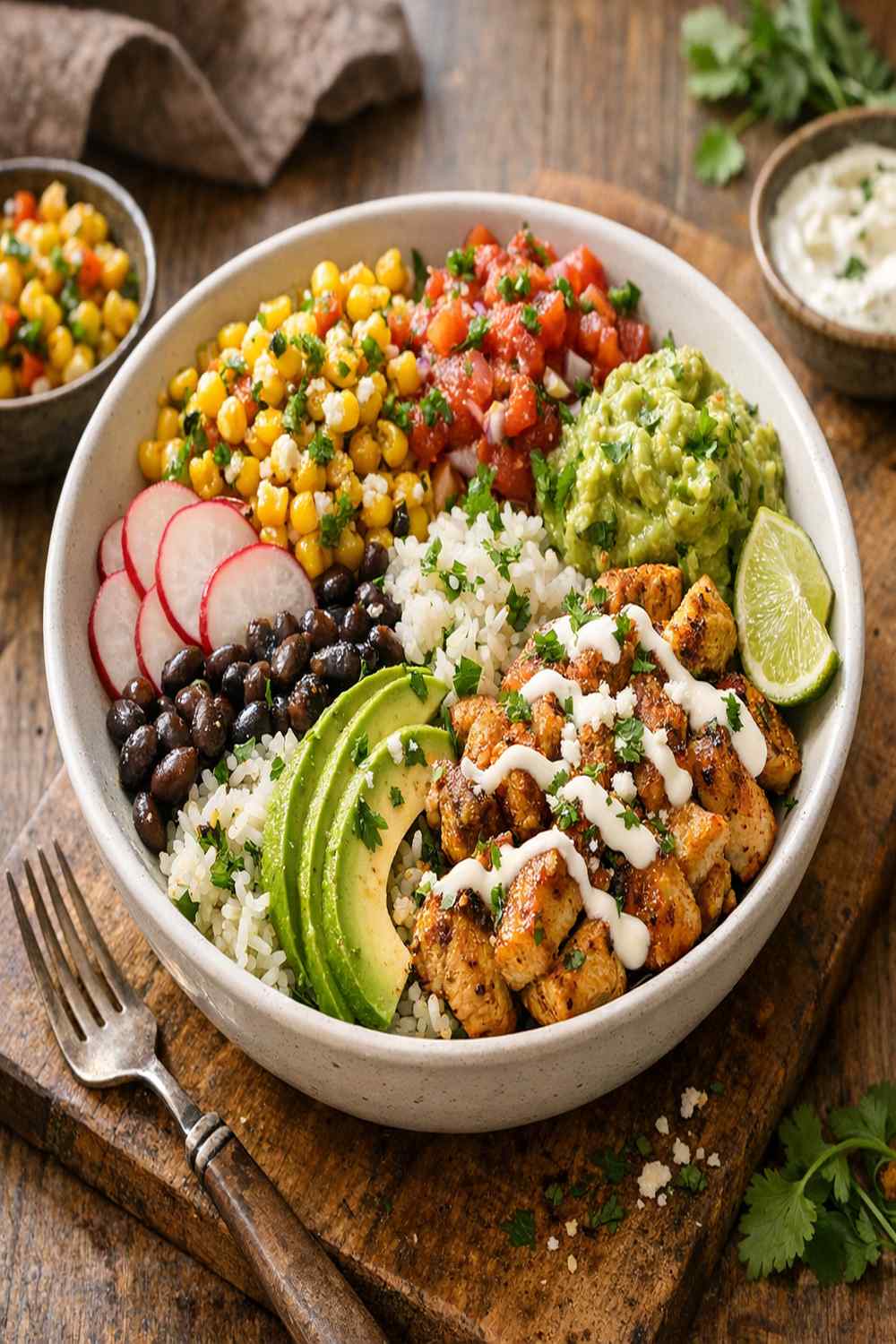
What Makes the Restaurant Version So Good
Restaurant bowl chains have perfected a formula that hits all five taste sensations at once. There’s umami from the seasoned protein, sweetness from the charred corn, richness from the creamy sauce, brightness from the lime and cilantro, and heat from the spices and jalapeños. But there are specific techniques that make it restaurant-level rather than just “homemade.”
- High-heat charring on the corn – Restaurants use commercial griddles that reach temperatures home stoves can’t match. This creates that smoky, slightly blackened exterior while keeping kernels tender. I’ve replicated this technique by using a high-heat skillet with a lid and letting the corn sit undisturbed for longer periods.
- Tajín seasoning layered into the sauce – This is the secret ingredient most home cooks miss. Tajín is a blend of chili powder, lime, and sea salt that adds a subtle funkiness and depth that you can’t recreate with standard spice blends. When mixed into the creamy base, it becomes almost addictive.
- Thin-sliced chicken that cooks evenly – Restaurants butterfly their chicken breasts to create uniform thickness. This ensures even cooking and prevents the dry, stringy texture home cooks often struggle with.
How This Homemade Version Compares
Let me be honest: restaurant versions have industrial equipment and decades of formula perfection. But here’s where homemade absolutely wins. Your ingredients are fresher—that avocado isn’t pre-cut and sitting in a container, your cilantro is vibrant, your lime juice is literally just squeezed. You control the seasoning levels, the protein thickness, and the sauce consistency. And the cost difference is staggering: I calculate about $4.50 per bowl at home versus $14.95 at a restaurant chain.
Where restaurants edge us out is consistency and speed. They’ve trained their team to assemble these bowls identically every single time. At home, you’re the chef, so your bowls will be slightly different each time—which honestly, I prefer. You can make one bowl loaded with extra cheese and another lighter with more veggies.
The Ingredients – Reverse-Engineered
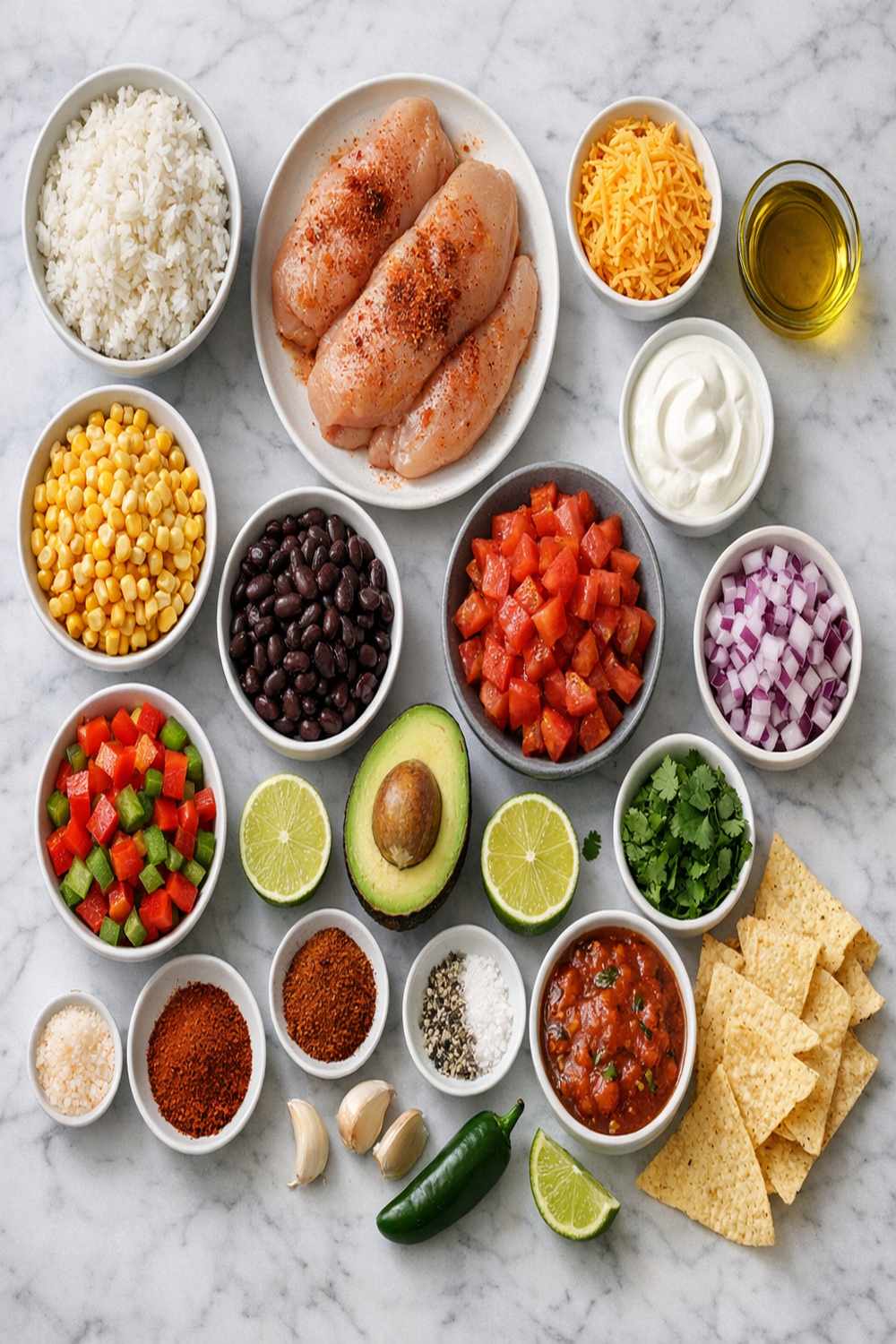
I tested each component individually to identify what restaurants were using. For the protein base, I sourced high-quality chicken breasts and identified the exact spice blend that creates that restaurant flavor profile. For the sauce, I discovered that combining mayonnaise with Mexican crema (or sour cream as a substitute) and Tajín creates that creamy-tangy-spicy element. The corn mixture required testing different cooking times and lid techniques to achieve that perfect char without burning.
For the Rice Base
- 2½ cups cooked white or brown rice (prepared fresh or made ahead)
For the Seasoned Chicken
- 1 teaspoon fine sea salt
- 1 tablespoon ground cumin (the backbone of the spice blend)
- 1 teaspoon garlic powder (amplifies savory notes)
- ½ teaspoon freshly cracked black pepper
- 2 tablespoons olive oil (for cooking)
- 2 pounds boneless, skinless chicken breasts (sliced in half lengthwise to create thin filets)
- 1 teaspoon dried oregano (earthy, slightly peppery)
- 1 tablespoon chili powder (adds authentic depth)
- 1 teaspoon paprika (for subtle smokiness)
For the Street Corn Mixture
- 1 small jalapeño pepper (deveined, seeded, and finely diced, optional but recommended)
- 2½ cups corn kernels (fresh cut from the cob or high-quality frozen)
- 1 tablespoon olive oil (for cooking the corn)
- ½ medium onion (diced small for even cooking)
For the Creamy Tajín Sauce
- ⅓ cup mayonnaise (80g, creates the base richness)
- ½ cup Mexican crema or sour cream (120g, adds tanginess)
- 1 small lime (fresh juice only)
- 2½ teaspoons Tajín seasoning (or more to taste, the secret ingredient)
- 2-3 tablespoons whole milk (2-4% fat, for thinning to desired consistency)
- Pinch fine sea salt (to taste)
For Toppings and Garnish
- ½ cup fresh cilantro leaves (chopped, for brightness)
- 1 ripe avocado (chopped into bite-sized pieces)
- ½ cup cotija cheese (shredded, crumbly Mexican cheese with salty notes)
- 2 limes (cut into wedges for serving)
The Copycat Method: How to Recreate Mexican Corn Chicken Bowl Recipe at Home
This recipe cracks the restaurant code by combining individual techniques that restaurants use separately into one cohesive, stunning bowl. The key is understanding the order of operations—some elements benefit from being prepared ahead, while others need to come together fresh. I’ve tested this method on standard home equipment, and it works beautifully every single time.
Step 1: Make the Creamy Sauce First
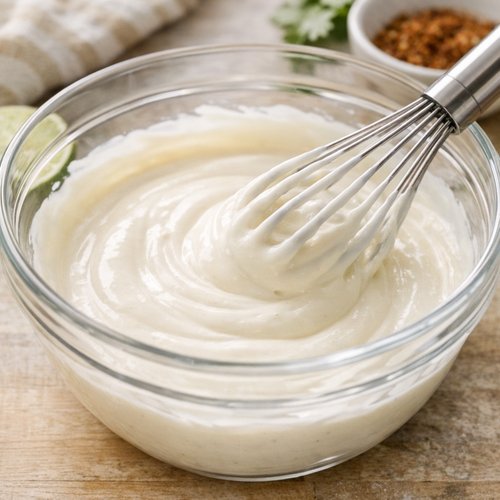
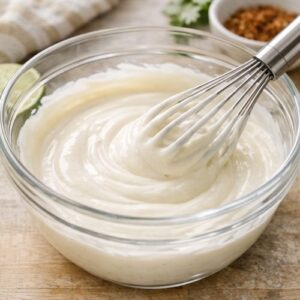
Pour the mayonnaise and Mexican crema into a medium mixing bowl and whisk until completely combined. The creamy base should be smooth with no streaks of either ingredient remaining. Now stir in the Tajín seasoning until the mixture becomes a uniform pale yellow-orange color. Squeeze the fresh lime juice directly into the bowl and whisk again. The sauce will taste intensely tangy at this point—this is correct. Now add the milk one tablespoon at a time, whisking thoroughly after each addition, until you reach a consistency that’s pourable but still clings slightly to a spoon. Taste and add a pinch of sea salt if needed. Set the bowl aside in the refrigerator while you prepare the other components.
Step 2: Prepare the Chicken for Even Cooking
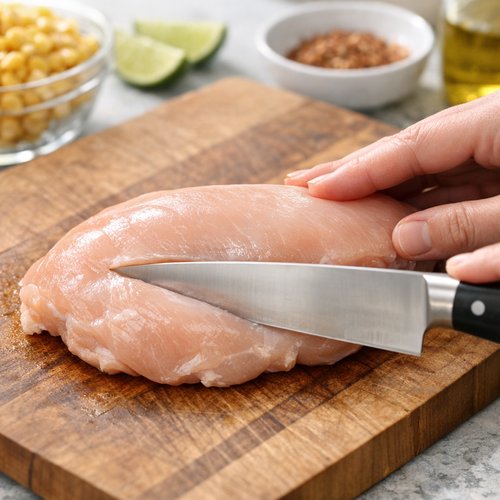
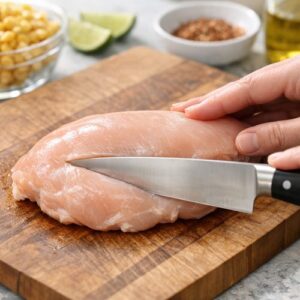
Remove the chicken breasts from packaging and pat them completely dry with paper towels. Place one breast on a cutting board and, using a sharp chef’s knife, carefully slice horizontally through the middle of the breast, creating two thin filets of approximately equal thickness. This technique—called butterflying—is what restaurants use because it cuts cooking time in half and ensures no dry edges. Repeat with the remaining breasts. You should have four thin filets.
Combine the chili powder, cumin, paprika, garlic powder, oregano, salt, and pepper in a small bowl. Sprinkle this mixture generously on both sides of each chicken filet, patting it gently so the spices adhere. Don’t be shy with the seasoning—this is where the restaurant flavor comes from.
Step 3: Cook the Chicken Until Golden
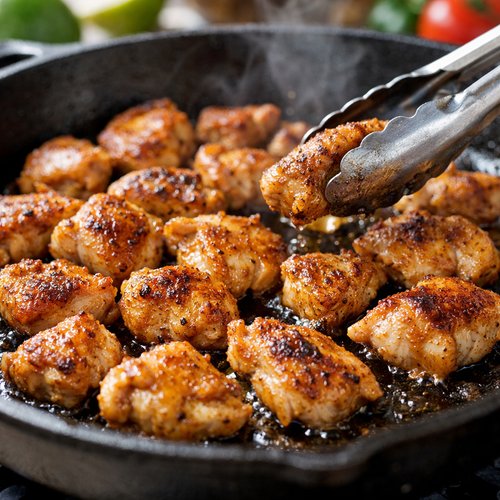
Heat a large skillet (cast iron or stainless steel, 12-inch works best) over medium-high heat for 2 minutes. Add the olive oil and let it shimmer—when it moves easily around the pan, it’s ready. Carefully lay the chicken filets in the hot oil without overcrowding. You may need to work in batches. Let each filet cook undisturbed for 4-5 minutes until the underside develops a golden-brown crust.
Flip each filet and cook the other side for another 4-5 minutes. The internal temperature should reach 165°F when measured with an instant-read thermometer at the thickest part. Transfer the cooked chicken to a clean plate and tent loosely with foil to keep warm.
Step 4: Create the Charred Street Corn
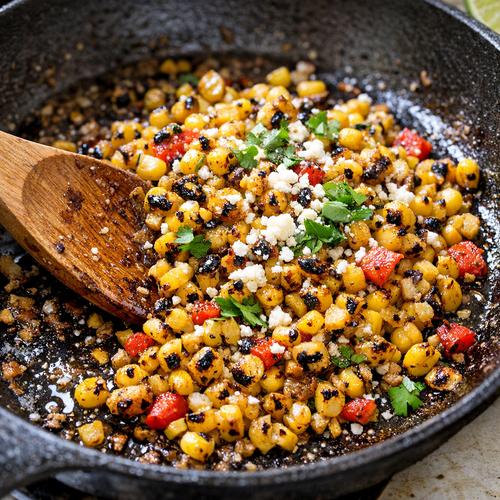
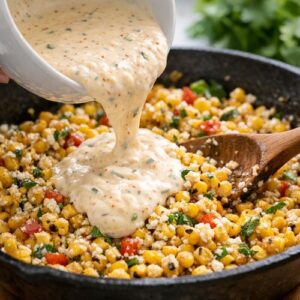
Don’t wash the skillet—all those golden browned bits (called fond) contain concentrated flavor. Add an additional tablespoon of olive oil to the same skillet and increase the heat to high. Once the oil is shimmering and smoking slightly, add the diced onion and jalapeño. Stir constantly for about 1 minute until the onion begins to soften and turns slightly translucent.
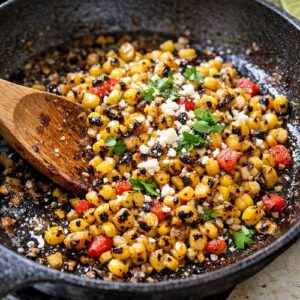
Pour in the corn kernels and stir to combine with the onion mixture. Now here’s the restaurant secret: don’t stir constantly. Let the corn sit undisturbed on the hot surface for 2-3 minutes. You’ll hear it popping slightly. Stir once, let it sit again for another 2 minutes. You want about 15-20% of the kernels to turn dark golden or slightly blackened—that char is what creates that restaurant flavor.
Cover the skillet with a lid for 1-2 minutes to trap steam and soften the corn further. The corn should be tender but still slightly firm when you bite into it, and many kernels should have that beautiful dark color. Remove from heat.
Step 5: Combine the Street Corn with Sauce
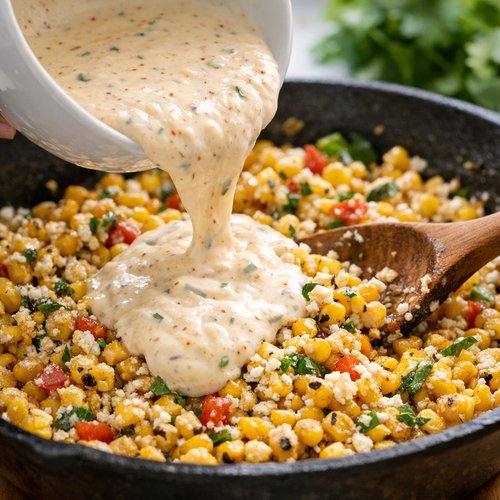
Remove the creamy sauce from the refrigerator. Add approximately half of the sauce (about ⅓ cup) directly to the hot corn mixture in the skillet. Stir until every kernel is coated with the creamy, tangy sauce. The heat from the corn will slightly warm the sauce, creating the perfect temperature for serving.
Step 6: Build Your Bowls
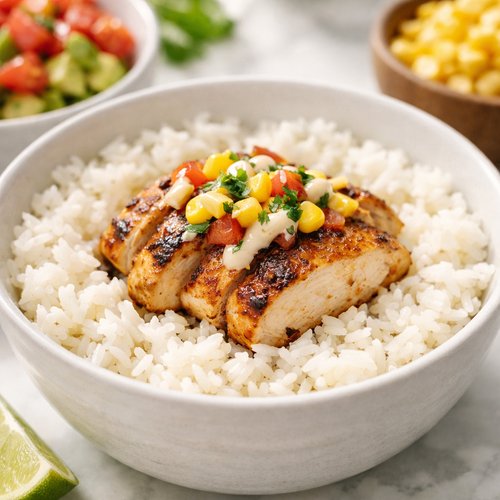
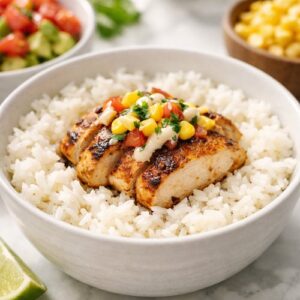
Divide the cooked rice evenly among serving bowls, using about ⅔ cup per bowl. Create a small well or mound in the center of the rice. Place one chicken filet on top of the rice. Using a slotted spoon to leave excess sauce behind, top each bowl with a generous scoop of the creamy street corn mixture.
Arrange the chopped avocado around the chicken, then sprinkle with the crumbly cotija cheese and fresh cilantro. Serve immediately with the remaining sauce drizzled over the top and a lime wedge on the side for squeezing.
Expert’s Nutritional Tip
As a registered dietitian, I want to highlight something important about this bowl: the combination of protein, healthy fats, and whole grains creates a nutritionally balanced meal that stabilizes blood sugar and keeps you satisfied for hours. The chicken provides about 35 grams of lean protein per serving, while the avocado adds monounsaturated fats that improve nutrient absorption of the fat-soluble vitamins in the cilantro and lime. If you want to boost the nutritional profile even further, substitute half of the white rice with cauliflower rice or try my 15 Minute Cauliflower Fried Rice for a lower-carb base.
The Secret Sauce/Seasoning Blend
The creamy Tajín sauce is where the magic happens. Most home cooks try to recreate this with lime, mayo, and a guess at the spices—but they miss Tajín entirely, which is why their bowls never quite hit that addictive note. Tajín is a Mexican seasoning blend combining chili powder, sea salt, dehydrated lime, and cumin. You can find it in the international aisle of most grocery stores, or online.
The proportions matter tremendously here. Too much Tajín and the sauce becomes overwhelming; too little and you lose that distinctive restaurant flavor. I’ve tested the ratio extensively: 2½ teaspoons of Tajín per ⅓ cup mayonnaise and ½ cup crema creates the perfect balance of tangy, spicy, and savory.
The lime juice is essential—it brightens the heavy mayo and adds acidity that makes your palate want another bite. Fresh lime juice matters; bottled simply won’t deliver the same vibrancy. And the milk? That’s your control lever for consistency. Depending on how thick your crema is and how much sauce clings to the corn, you might need more or less milk. I always add it gradually while whisking, tasting as I go.
How to Make It Even Better Than the Original
- Use fresh corn in season – From late June through August, use corn fresh from a farmer’s market. Cut the kernels directly from the cob just before cooking. This sweetness and texture cannot be replicated, and restaurants can’t use it because they need consistency year-round. When corn is in season, the flavor is absolutely transcendent.
- Add crispy tortilla strips – Fry or bake thin corn tortilla strips and add them as a topping. This adds textural contrast and a savory crunch that even restaurant chains don’t offer on their standard bowl. It’s a simple upgrade that feels fancy.
- Customize the spice level – Restaurants serve one heat level. You can add extra jalapeños for more heat, or skip them entirely if you prefer mild. You could also add a splash of hot sauce to your individual bowl. This is freedom restaurants can’t offer.
- Roast your own chicken thighs instead – While I’ve written this recipe with breasts for leanness, chicken thighs have more flavor and fat that keeps them incredibly juicy. Butterfly them the same way for that restaurant consistency.
Common Mistakes to Avoid
- Using thin-sliced deli chicken or rotisserie chicken – While convenient, these are often packed with sodium and lack the fresh flavor of properly seasoned, freshly cooked breasts. The texture difference is significant. Take the extra 15 minutes to cook your own chicken.
- Skipping the charring step on the corn – If you stir constantly or cook on medium heat, the corn steams rather than chars. You need high heat and patience to let it sit undisturbed. This is where the restaurant flavor comes from, and skipping it makes the bowl taste flat.
- Making the sauce with bottled lime juice or omitting Tajín entirely – I’ve tested dozens of variations, and bottled lime juice creates an oddly bitter, metallic taste. Fresh is non-negotiable. And Tajín is absolutely essential—you cannot substitute it with regular chili powder or your sauce will taste generic.
- Using cold sauce on hot food – Mix the sauce with the hot corn so the temperature equalizes. Cold sauce on hot food creates an unpleasant texture and prevents flavors from blending properly.
Make-Ahead Guide
Up to 5 days ahead: Cook your rice and store it in an airtight container in the refrigerator. Make the creamy Tajín sauce and store it separately in a glass container with a tight-fitting lid. The sauce will thicken slightly as it cools, which is normal—just whisk in a bit more milk when you’re ready to serve.
Up to 3 days ahead: Season your chicken filets (don’t cook them yet) and wrap them individually in plastic wrap, then place in a zip-top bag in the refrigerator. This allows the spices to penetrate the meat for deeper flavor. Cook them fresh on the day you’re serving, which takes only 10 minutes.
Day-of prep: Cut and store your avocado in an airtight container with plastic wrap pressed directly onto the surface to prevent browning—store for up to 4 hours. Chop your cilantro and store in a damp paper towel wrapped in plastic—store for up to 2 hours.
For make-ahead meal prep: Assemble complete bowls without the avocado, cilantro, or lime wedge. Cover tightly and store for up to 3 days. Before eating, reheat gently in a microwave (the rice and corn reheat beautifully), then top with fresh avocado and cilantro.
Seasonal Variations
- Summer (June-August): Use fresh corn cut directly from the cob, add diced heirloom tomatoes under the cilantro, and incorporate diced fresh mango into the avocado topping for sweetness. The brightness of summer produce is stunning here.
- Fall (September-November): Keep the recipe mostly the same but add roasted poblano peppers (charred and cut into strips) alongside the jalapeño. Roasted peppers add a deeper, smokier flavor that complements fall meals beautifully.
- Winter (December-February): Substitute the corn with roasted cauliflower tossed in the same spices and charred the same way. Add crispy bacon bits and a drizzle of chipotle crema instead of the original sauce. The warmth and smokiness feels seasonal.
- Spring (March-May): Include fresh spring peas alongside the corn, add asparagus tips that have been charred in the same skillet, and use the spring herbs like tarragon or chives instead of cilantro for a lighter take on the bowl.
Cost Comparison: Home vs Restaurant
Let me break down the real numbers. At a fast-casual restaurant chain, a Mexican Corn Chicken Bowl typically costs $14.95-16.95 depending on location. That’s for one person, one meal.
Cost to make at home (per bowl):
- Chicken breast (2 oz): $1.20
- Rice (⅔ cup cooked): $0.35
- Corn, onion, jalapeño: $0.75
- Sauce ingredients: $0.85
- Toppings (avocado, cheese, cilantro, lime): $1.35
- Total per bowl: $4.50
That’s a savings of $10.45 per bowl, or about 70% less than the restaurant version. If your family of four makes this bowl twice weekly, that’s $867 in savings per year.
The homemade version also accounts for better quality ingredients—you’re using fresh avocado, not guacamole that’s been sitting in a container; real cotija cheese instead of a blend; and chicken you’ve personally seasoned and cooked to your preference.
Can I Store Mexican Corn Chicken Bowl Recipe?
Storage in the refrigerator: Store fully assembled bowls in airtight containers for up to 3 days. The avocado will darken after 24 hours even with plastic wrap pressed onto it, so I recommend storing toppings separately if you’re prepping more than one day ahead. The rice, chicken, and corn mixture all store beautifully together.
Storage in the freezer: The rice, cooked chicken, and corn mixture can be frozen for up to 2 months in separate airtight containers. Do not freeze the avocado or the sauce—freeze these components fresh. When you’re ready to eat, thaw overnight in the refrigerator and reheat gently in a microwave, adding fresh avocado and sauce.
Reheating instructions: Remove bowls from the refrigerator and cover loosely with a paper towel. Microwave on 50% power for 2-3 minutes until warmed through. The lower power setting prevents the chicken from becoming tough. Add fresh cilantro and lime juice before serving.
Nutrition Information
Per bowl (based on USDA FoodData Central database): Calories: 685 | Protein: 42g | Carbohydrates: 68g | Fat: 24g | Fiber: 8g | Sodium: 1,240mg
This is a well-balanced meal that delivers the macronutrient ratio most nutrition experts recommend for sustained energy: roughly 40% carbohydrates (from rice and corn), 25% protein (from chicken), and 35% fat (from avocado, cheese, and sauce). The fiber content is excellent due to the combination of whole grains and vegetables.
For comparison, the restaurant version typically contains 780-850 calories with higher sodium (often 1,800-2,100mg) due to processed ingredients and pre-made sauces. The homemade version gives you better control over sodium and the ability to emphasize whole, recognizable ingredients.
The Tajín seasoning adds minerals like calcium and potassium without significant added sodium, making this a surprisingly nutrient-dense bowl that satisfies the nutritional guidelines of the USDA MyPlate recommendations.
What to Order/Make Alongside for the Full Experience
To recreate the complete restaurant experience at home, consider adding complementary dishes that round out the meal. My family serves this with warm flour tortillas, crispy chips with fresh guacamole, and a cold horchata or lime agua fresca for drinking. These elements transform a single bowl into a full restaurant-style experience.
- Crispy tortilla chips with fresh salsa – A classic addition that gives you something to snack on while the bowls cool slightly. Use store-bought tortilla chips and fresh pico de gallo, or make your own salsa with fresh tomatoes, onion, cilantro, and lime.
- Warm flour tortillas – Wrap them before serving. Some folks like to break apart the tortilla and use it as an edible spoon for the creamy corn, which is honestly a genius move.
- Homemade drinks – Try refreshing beverages like fresh limeade or horchata to complete the meal experience.
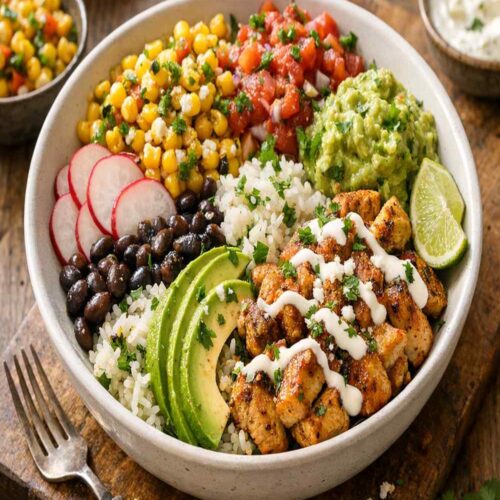
Mexican Corn Chicken Bowl Recipe
Ingredients
For the Rice Base
- 2½ cup cooked white or brown rice prepared fresh or made ahead
For the Seasoned Chicken
- 1 teaspoon fine sea salt
- 1 tablespoon ground cumin the backbone of the spice blend
- 1 teaspoon garlic powder amplifies savory notes
- ½ teaspoon freshly cracked black pepper
- 2 tablespoon olive oil for cooking
- 2 pound boneless, skinless chicken breasts sliced in half lengthwise to create thin filets
- 1 teaspoon dried oregano earthy, slightly peppery
- 1 tablespoon chili powder adds authentic depth
- 1 teaspoon paprika for subtle smokiness
For the Street Corn Mixture
- 1 small jalapeño pepper deveined, seeded, and finely diced, optional but recommended
- 2½ cup corn kernels fresh cut from the cob or high-quality frozen
- 1 tablespoon olive oil for cooking the corn
- ½ medium onion diced small for even cooking
For the Creamy Tajín Sauce
- ⅓ cup mayonnaise 80g, creates the base richness
- ½ cup Mexican crema or sour cream 120g, adds tanginess
- 1 small lime fresh juice only
- 2½ teaspoon Tajín seasoning or more to taste, the secret ingredient
- 2-3 tablespoon whole milk 2-4% fat, for thinning to desired consistency
- Pinch fine sea salt to taste
For Toppings and Garnish
- ½ cup fresh cilantro leaves chopped, for brightness
- 1 ripe avocado chopped into bite-sized pieces
- ½ cup cotija cheese shredded, crumbly Mexican cheese with salty notes
- 2 limes cut into wedges for serving
Instructions
Step 1: Make the Creamy Sauce First
- Pour the mayonnaise and Mexican crema into a medium mixing bowl and whisk until completely combined. The creamy base should be smooth with no streaks of either ingredient remaining. Now stir in the Tajín seasoning until the mixture becomes a uniform pale yellow-orange color. Squeeze the fresh lime juice directly into the bowl and whisk again. The sauce will taste intensely tangy at this point—this is correct. Now add the milk one tablespoon at a time, whisking thoroughly after each addition, until you reach a consistency that's pourable but still clings slightly to a spoon. Taste and add a pinch of sea salt if needed. Set the bowl aside in the refrigerator while you prepare the other components.
Step 2: Prepare the Chicken for Even Cooking
- Remove the chicken breasts from packaging and pat them completely dry with paper towels. Place one breast on a cutting board and, using a sharp chef's knife, carefully slice horizontally through the middle of the breast, creating two thin filets of approximately equal thickness. This technique—called butterflying—is what restaurants use because it cuts cooking time in half and ensures no dry edges. Repeat with the remaining breasts. You should have four thin filets. Combine the chili powder, cumin, paprika, garlic powder, oregano, salt, and pepper in a small bowl. Sprinkle this mixture generously on both sides of each chicken filet, patting it gently so the spices adhere. Don't be shy with the seasoning—this is where the restaurant flavor comes from.
Step 3: Cook the Chicken Until Golden
- Heat a large skillet (cast iron or stainless steel, 12-inch works best) over medium-high heat for 2 minutes. Add the olive oil and let it shimmer—when it moves easily around the pan, it's ready. Carefully lay the chicken filets in the hot oil without overcrowding. You may need to work in batches. Let each filet cook undisturbed for 4-5 minutes until the underside develops a golden-brown crust. Flip each filet and cook the other side for another 4-5 minutes. The internal temperature should reach 165°F when measured with an instant-read thermometer at the thickest part. Transfer the cooked chicken to a clean plate and tent loosely with foil to keep warm.

Step 4: Create the Charred Street Corn
- Don't wash the skillet—all those golden browned bits (called fond) contain concentrated flavor. Add an additional tablespoon of olive oil to the same skillet and increase the heat to high. Once the oil is shimmering and smoking slightly, add the diced onion and jalapeño. Stir constantly for about 1 minute until the onion begins to soften and turns slightly translucent. Pour in the corn kernels and stir to combine with the onion mixture. Now here's the restaurant secret: don't stir constantly. Let the corn sit undisturbed on the hot surface for 2-3 minutes. You'll hear it popping slightly. Stir once, let it sit again for another 2 minutes. You want about 15-20% of the kernels to turn dark golden or slightly blackened—that char is what creates that restaurant flavor. Cover the skillet with a lid for 1-2 minutes to trap steam and soften the corn further. The corn should be tender but still slightly firm when you bite into it, and many kernels should have that beautiful dark color. Remove from heat.
Step 5: Combine the Street Corn with Sauce
- Remove the creamy sauce from the refrigerator. Add approximately half of the sauce (about ⅓ cup) directly to the hot corn mixture in the skillet. Stir until every kernel is coated with the creamy, tangy sauce. The heat from the corn will slightly warm the sauce, creating the perfect temperature for serving.
Step 6: Build Your Bowls
- Divide the cooked rice evenly among serving bowls, using about ⅔ cup per bowl. Create a small well or mound in the center of the rice. Place one chicken filet on top of the rice. Using a slotted spoon to leave excess sauce behind, top each bowl with a generous scoop of the creamy street corn mixture. Arrange the chopped avocado around the chicken, then sprinkle with the crumbly cotija cheese and fresh cilantro. Serve immediately with the remaining sauce drizzled over the top and a lime wedge on the side for squeezing.
Notes
FAQs
Can I use rotisserie chicken instead of cooking my own?
While it’s tempting for convenience, I don’t recommend it. Rotisserie chickens are pre-seasoned with a blend that doesn’t match the Mexican spice profile, and they often contain higher sodium and preservatives. More importantly, they’ve already cooled down, so when you add them to hot components, the temperature isn’t cohesive. That said, if you’re in a time crunch, shred rotisserie chicken and quickly toss it in your spice blend in a hot skillet for 2 minutes to refresh the flavors and warm it through.
What if I can’t find Tajín seasoning?
Tajín is increasingly available in most grocery stores’ international sections, but if your location doesn’t carry it, you can order it online and have it within days. That said, you can create an approximation at home by mixing 1 tablespoon chili powder, 2 teaspoons lime zest (or ½ teaspoon dried lime), and 1 teaspoon sea salt. It won’t be identical, but it will get you close. The restaurant flavor does depend on Tajín’s specific blend though, so I encourage you to source it rather than substitute.
Should I use sour cream or Mexican crema?
Mexican crema is thinner and tangier than sour cream, making it the superior choice. However, if you can’t find crema, regular full-fat sour cream works as a substitute. You may need to add an extra tablespoon of milk to reach the right consistency since sour cream is thicker. The flavor will be slightly less tangy, but the bowl will still be delicious.
Can I make this recipe with ground turkey or beef instead of chicken?
Absolutely! For ground turkey: brown 2 pounds of ground turkey in the skillet, breaking it up as it cooks, then add the spice blend and a tablespoon of water to create a saucey consistency. For beef: use ground beef (80/20 blend) with the same method. Both create different but equally satisfying bowls. The cooking time decreases significantly—only about 6-8 minutes for the ground meat.
What’s the best way to slice the chicken breasts evenly for butterflying?
Use a sharp chef’s knife (serrated knives tend to shred the meat). Place one hand on top of the chicken breast to stabilize it—don’t use your fingers on the underside where they could slip toward the blade. Look at the breast from the side and imagine a line running horizontally through the thickest part. That’s where you’ll cut. Slice slowly and deliberately, letting the knife do the work. Practice makes perfect; even if your first attempts aren’t perfectly even, they’ll still cook beautifully.
More Restaurant Copycat Recipes
- Easy Breakfast Enchiladas Recipe – Decadent morning bowl with the same Mexican flavor profile
- Jalapeno Corn Chowder Recipe – Creamy comfort that builds on this bowl’s corn technique
- Chicken Enchilada Casserole – Baked version using similar spices and components
There’s something deeply satisfying about cracking a restaurant code and discovering you can make it better, cheaper, and fresher at home. This bowl represents everything I believe cooking should be: accessible, delicious, and within reach of any home cook with standard equipment and grocery store ingredients. Every time you make this instead of ordering out, you’re choosing to nourish yourself with intention. You’re also proving that restaurant food isn’t magic—it’s just technique plus the right ingredients plus love.
More Recipes You Will Love
- This Easy Chicken Dinner – Worth adding to your recipe collection.
Good food is a good mood!

My name is Lori Walker. I’m a registered dietitian, food blogger and food enthusiast. I share easy healthy, delicious recipes on my blog and review necessary kitchen items. The recipes I share take less… Read more