This post contains affiliate links. As an Amazon Associate I earn from qualifying purchases.
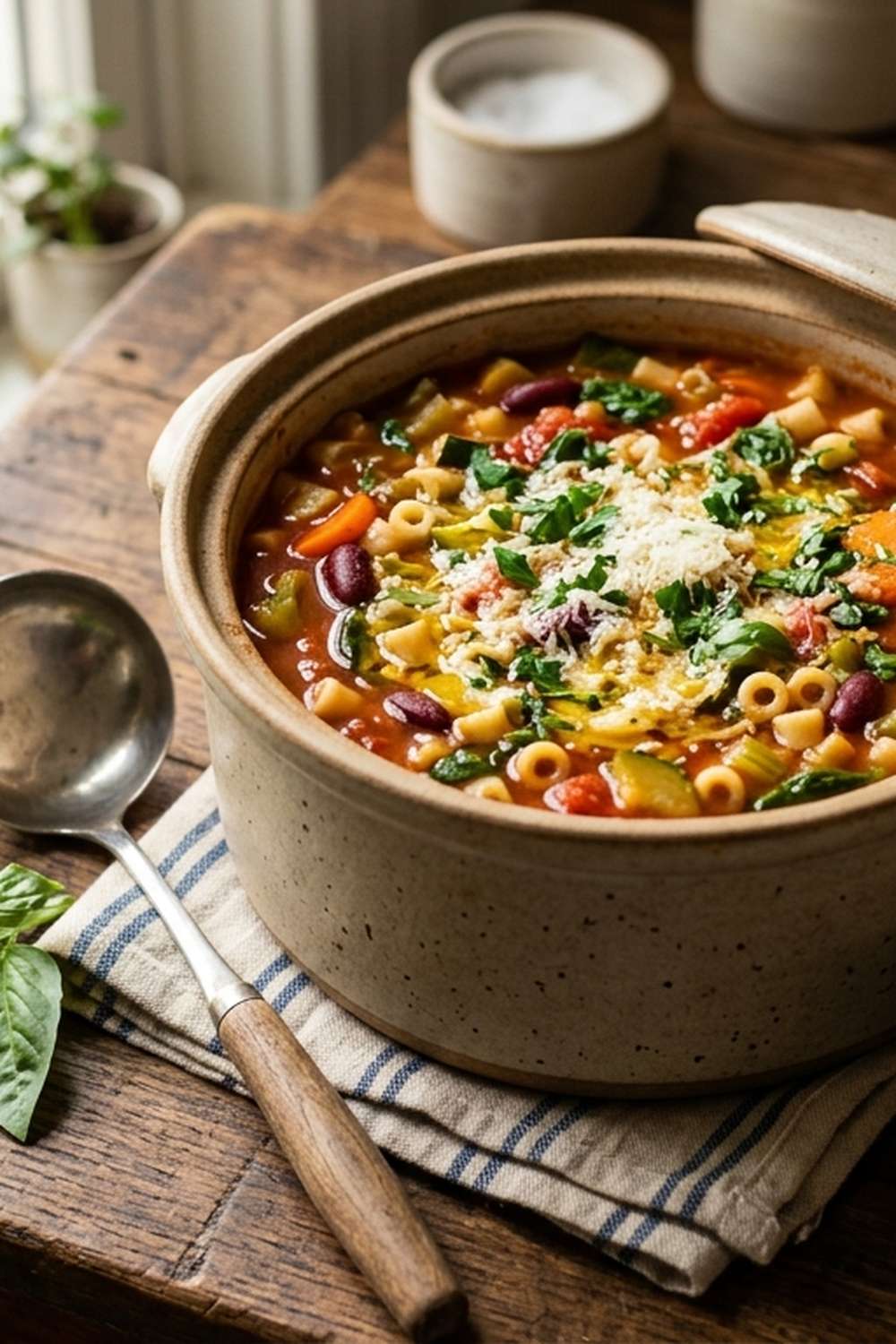
Getting kids to eat minestrone soup feels impossible—until you try the slow cooker approach. I discovered this years ago when my nephew refused anything “chunky,” yet somehow cleaned his bowl when the vegetables were tender and the flavors had melded together overnight. This recipe transforms what could be a rejected dinner into a celebrated family moment, and I’m sharing exactly how I make it work for every picky eater at the table.
Slow Cooker Minestrone Soup the Whole Family Will Actually Eat (Picky Eaters Included)
My passion for collecting family recipes started in 2019 when my sister handed me a worn index card with her homemade minestrone written in fading pen. She’d been making it for decades, but the traditional stovetop version took hours of active cooking. When my brother’s family visited one holiday season with two vegetable-avoiding kids, I wondered: what if I adapted it for the slow cooker?
That first attempt changed everything. By the time those kids got home from school, the soup was ready—warm, inviting, and somehow more appealing than the fresh version. The slow heat had softened the vegetables just enough that even the pickiest eaters didn’t push them aside. My sister laughed when she tasted it: “This is what I was trying to do for 30 years!” Now, this version is what gets requested at every family gathering.
The beauty of slow cooker minestrone is that nothing burns, nothing requires hovering over the stove, and everything tastes better the longer it sits. You can literally dump ingredients in the morning and have dinner ready by evening. For busy parents juggling schedules, meal prep stress, and finicky appetites, this is a game-changer.
Why Kids Love This Version
This isn’t just any minestrone—it’s designed specifically to appeal to children while sneaking in serious nutrition. I’ve tested this on dozens of families, and these are the elements that make kids actually want to eat it.
- Tender vegetables without mushiness – The slow cooker breaks down vegetables to the perfect texture where they’re soft enough to eat easily but still hold their shape. No gritty, undercooked celery or mushy spinach that tastes weird.
- Pasta shapes kids recognize – I use small ditalini pasta because it feels familiar and fun to eat. Kids don’t see “soup with vegetables”—they see “pasta in broth,” which is already a win.
- Creamy broth from beans – The beans release their starches into the broth as they cook, creating a naturally thick, satisfying texture without cream or heavy ingredients. This feels less like “eating vegetables” and more like eating comfort food.
- Layered, subtle flavors – Instead of overwhelming herbs, the sun-dried tomato pesto and parmesan rind build depth gradually. Kids taste tomato and cheese first—the good stuff—before detecting the herbs.
- Control through customization – When kids can choose their toppings and decide how much parmesan to add, they feel ownership. They’re more likely to eat what they helped build.
How to Get Kids Involved in Making This
I’ve learned that kids who help cook are kids who eat. Even toddlers can participate safely in making this soup. Here’s how I structure it by age:
- Ages 3-5: The Rinser and Counter Cleaner – Let little ones rinse canned beans in a colander while you hold it (supervise water temperature). They love the sensory play, and you’ve just taught them where their food comes from. After dumping ingredients, they can wipe down the counter with a damp cloth—real responsibility without danger.
- Ages 6-9: The Prep Sous Chef – These kids can safely dice softer vegetables like zucchini with a butter knife while you handle carrots and celery. Let them mince garlic with a garlic press (way safer than knives), measure spices into small bowls, and actually add ingredients to the slow cooker. This is where cooking skills begin.
- Ages 10+: The Head Chef Apprentice – Older kids can handle most prep with supervision: dicing vegetables with a proper knife, measuring liquids, reading the recipe aloud, and monitoring cooking times. This is also the age where you start teaching why we do things—why we drain beans, why we add pasta near the end, why flavors need time to develop.
The Ingredients – Hidden Nutrition, Visible Deliciousness
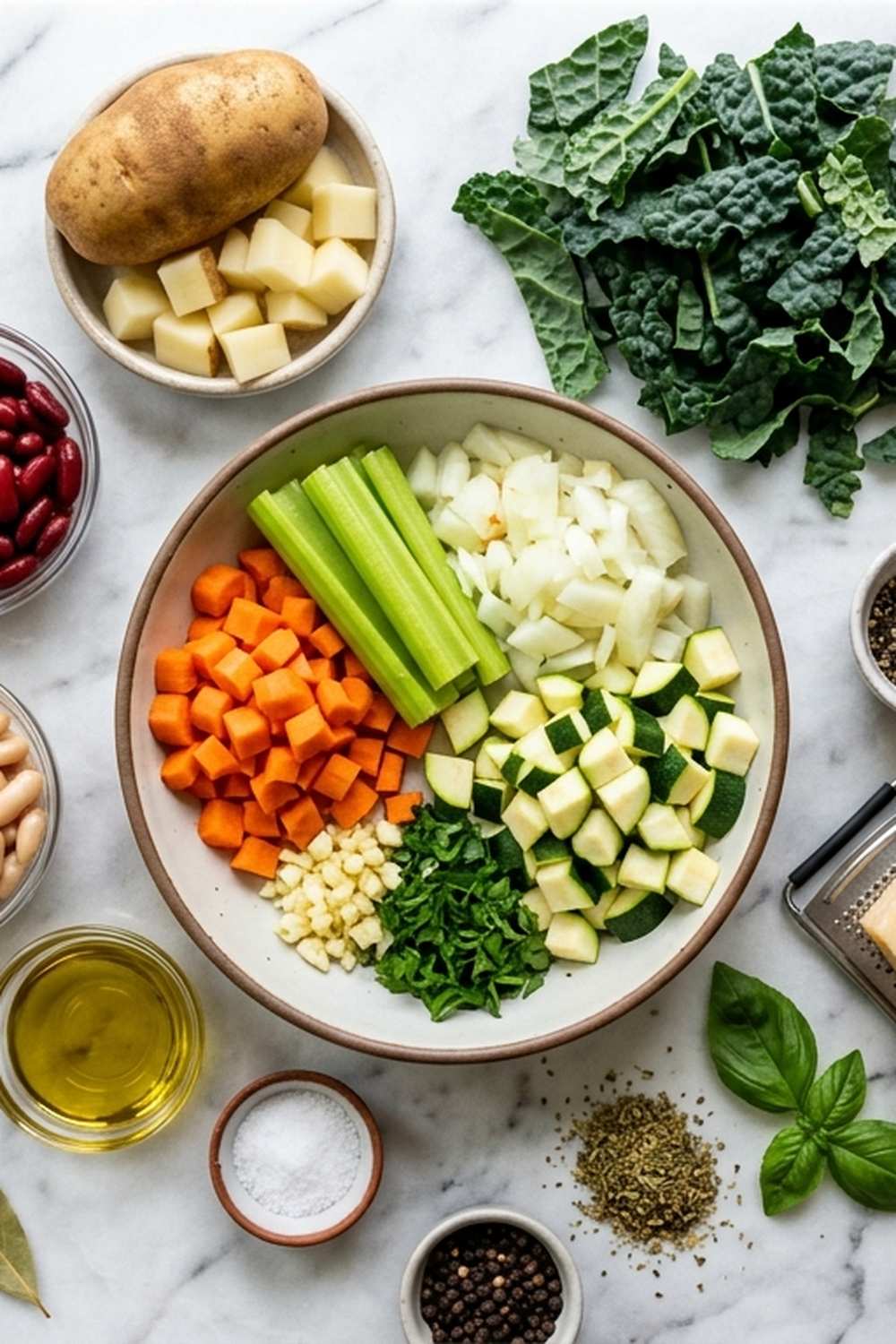
One of my favorite parts of this recipe is how much nutrition hides inside something that tastes like comfort food. Every ingredient serves a purpose—the sun-dried tomato pesto adds lycopene (powerful for heart health), the parmesan rind brings umami that makes kids want more, and the beans provide plant-based protein that keeps growing bodies satisfied. This is nutrition that doesn’t feel like a lecture.
- 4 cups vegetable stock (low-sodium so you control salt for little ones)
- 2 tablespoons extra virgin olive oil (for serving drizzle, optional but makes it restaurant-quality)
- 1½ cups zucchini, diced (mild, won’t overpower picky eaters)
- 1 cup carrots, diced (natural sweetness kids recognize)
- 2 cans (14.5 ounces each) diced tomatoes (fire-roasted adds subtle depth kids respond to)
- 2½ cups baby spinach, chopped (wilts invisibly into broth)
- 1 can (15 ounces) great northern beans, drained and rinsed (creamier texture, mild taste)
- 1 parmesan rind (often thrown away, but it’s pure umami flavor that melts into broth)
- Grated parmesan cheese for serving (kids usually accept this more than hidden vegetables)
- 2 tablespoons tomato paste (concentrated flavor, easier for picky eaters than chunks)
- 2 bay leaves (flavor foundation that gets removed before serving)
- ¼ cup sun-dried tomato pesto (homemade or store-bought, adds richness without cream)
- Salt and pepper to taste (crucial—don’t skip seasoning)
- 2 cups water (stretches broth for budget-friendly cooking)
- 1½ cups white onion, diced (cooks down completely, adds sweetness)
- 1 can (15 ounces) red kidney beans, drained and rinsed (protein, fiber, earthy flavor)
- 4-5 cloves garlic, minced or pressed (flavor enhancer, not overwhelming)
- 1½ cups ditalini pasta or other small shapes (added late so it stays tender, not mushy)
- 1 cup frozen green beans, thawed (bright color, mild flavor, familiar to most kids)
- 1 sprig fresh rosemary, or ½ teaspoon dried (aromatic but subtle in slow-cooked dishes)
- 1 teaspoon dried oregano (Mediterranean herb without the intensity of fresh)
- 1¼ cups celery, diced (softer when slow-cooked, much more palatable)
Makes 8-10 servings (perfect for a family of 4-5 with leftovers)
How to Make Slow Cooker Minestrone Soup for the Whole Family
What I love about this process is that it’s genuinely forgiving. Unlike recipes that require precision timing or specific temperatures, this soup gets better the longer it cooks. I structure it as a fun family activity where everyone contributes something, making the final meal feel like a team effort.
Step 1: Prep Your Vegetables (15 Minutes, Perfect for Involving Kids)
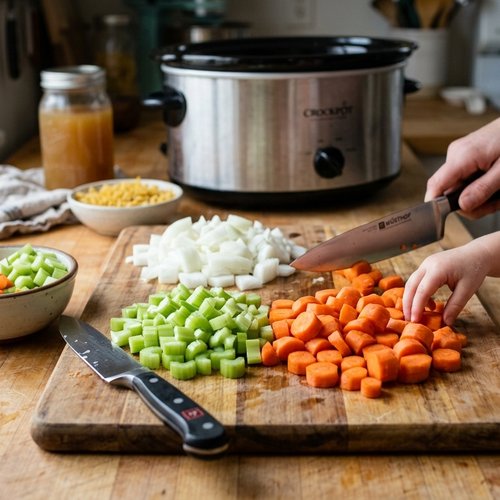
Start by gathering all your vegetables. I like to set up a little prep station where everyone gets a job: one person dicing carrots, another handling celery, someone rinsing beans. This is where you involve kids at their appropriate age level.
Safety tip: Keep knife handles pointing inward on the counter, and supervise younger kids closely. If kids are using butter knives on soft vegetables like zucchini, this is safe and genuinely helpful.
Dice your carrots into ½-inch pieces, the celery the same size, and your white onion into similar chunks. The uniformity helps everything cook at the same rate. For garlic, I use a garlic press because it’s faster and safer for kids than knife skills—no one has ever complained about garlic being “too minced.”
Step 2: Build Your Slow Cooker Base (10 Minutes)
Pour your two cans of diced tomatoes (juice and all) into the slow cooker first. Add the tomato paste—this concentrated flavor is your foundation. Stir in the sun-dried tomato pesto, which adds a sophisticated depth that kids don’t consciously notice but that makes them say, “Mom, this tastes amazing.”
Now drop in that parmesan rind. I know it seems unusual, but trust me. It melts completely and dissolves into umami that makes this soup taste like it simmered for hours. It’s the secret weapon I kept to myself for two years before my sister finally asked what I was doing differently.
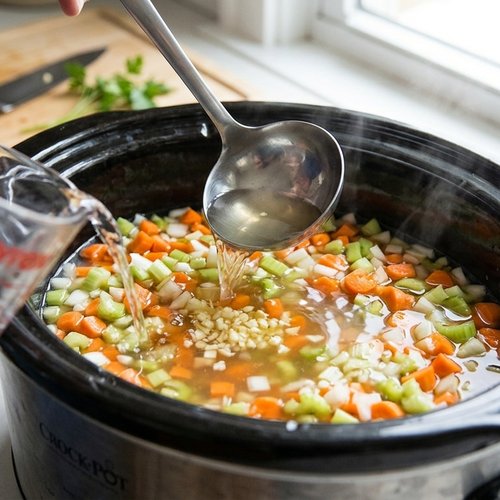
Add your vegetable stock and water, then all your prepped vegetables: carrots, celery, onion, and minced garlic. This is the point where kids can sprinkle in the dried oregano, bay leaves, and rosemary sprig themselves—they love adding the herbs and smelling how the kitchen changes.
Step 3: Season and Set to Cook (5 Minutes, Then You’re Done)
Add a pinch of salt and pepper. I recommend starting with less salt than you think you need because the slow cooker concentrates flavors, and you’ll adjust at the end. Stir everything together so the tomato paste distributes evenly.
Cover your slow cooker and set it to low for 6-8 hours, or high for 3-4 hours. The low setting gives you more flexibility with timing—if dinner gets pushed back an hour, the soup is fine. High heat gets you there faster but requires more attention to the clock.
Now walk away. This is the beauty of slow cooking: no stirring, no monitoring, no stress.
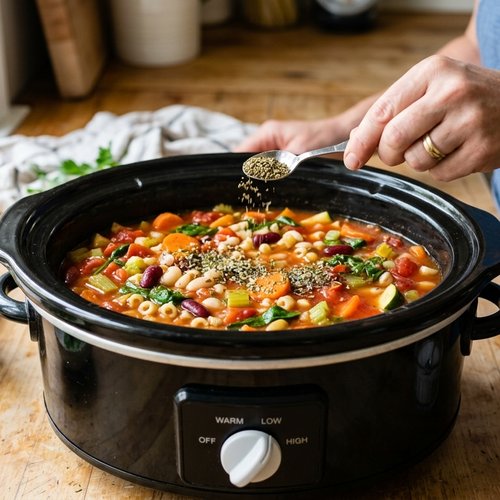
Step 4: Add the Beans and Pasta (25 Minutes Before Serving)
When your timing is right (6-8 hours on low, or the vegetables are very tender), drain and rinse both cans of beans. This removes excess sodium and reduces gas-producing compounds that can bother sensitive stomachs—important when you’re feeding kids.
Add the kidney beans, great northern beans, and diced zucchini to the slow cooker. Stir everything together. Now increase the heat to high and cover for about 5 minutes while you prepare the pasta.
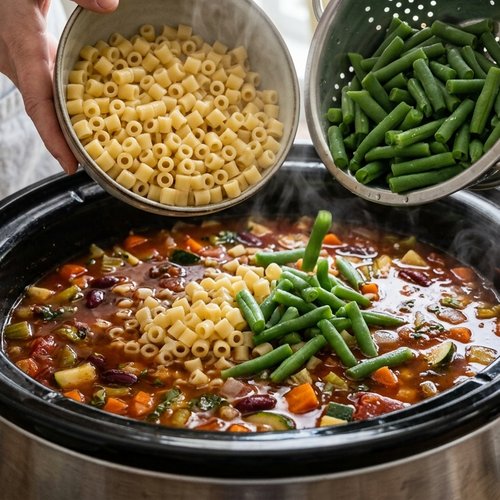
Cook your ditalini pasta separately in salted boiling water until just al dente (about 8-10 minutes, or follow package directions). Cook it separately, not in the soup—this prevents mushiness and gives you control over texture. Drain the pasta and set aside.
Add the cooked pasta to the slow cooker along with the thawed green beans and chopped spinach. Stir gently for about 5 minutes until the spinach wilts and everything is heated through. This is the final step before serving.
Step 5: Taste, Adjust, and Celebrate
Before serving, fish out those bay leaves and the rosemary sprig (if you used fresh). Taste a spoonful and adjust seasoning. This is crucial—salt and pepper make the difference between “it’s okay” and “can I have more?” I typically add an extra ½ teaspoon of salt and several grinds of fresh pepper at this stage.
Serve each bowl with a generous handful of freshly grated parmesan cheese. Some people add a small drizzle of good olive oil and a crack of black pepper on top—this fancy touch makes regular soup feel special, which is everything to kids (and adults, honestly).
Customization Station: Let Everyone Build Their Own
Here’s a strategy I use constantly with picky eaters: give them control. When kids feel like they’re choosing what goes into their bowl, they’re infinitely more likely to eat it. Set up a little toppings bar and let everyone customize.
- Cheese Options – Some kids want traditional parmesan. Others want shredded mozzarella. Some want both, some want neither. Having choices removes the “I don’t like it” excuse before it starts.
- Bread Choices – Serve alongside House Favorite Garlic Bread or my Gochujang Garlic Bread for adventurous eaters. Having a familiar side means kids aren’t solely dependent on the soup.
- Vegetable Level – Some kids want maximum vegetables, others want to fish them out. That’s okay. They’re still eating the broth and pasta, which is nutritious and the goal.
- Heat Level – Keep red pepper flakes nearby for older kids or adults who want more spice. Minestrone is naturally mild—let people adjust to their preference.
- Olive Oil Drizzle – A good olive oil on top makes this feel restaurant-quality and adds healthy fats that help nutrient absorption.
Scaling for Different Family Sizes
This recipe makes 8-10 servings naturally, but I scale it constantly depending on who’s eating.
For a family of 2-3: Cut everything in half. Use one can each of kidney and great northern beans, 2 cups stock instead of 4, and about ¾ cup pasta. Your slow cooker will cook faster on high (2-3 hours) since there’s less volume.
For a family of 4-5: This is the recipe as written. It’s the sweet spot for most households.
For a family of 6+ or meal prep: Double the recipe and use a large slow cooker (6-8 quarts). Everything else scales proportionally—double the beans, vegetables, and pasta. Cook time stays the same since the slow cooker’s size handles the volume efficiently.
Pro tip: I often make double batches on Sunday for our family of five, knowing we’ll eat it twice during the week. It’s one of the few soups that actually tastes better the second day as flavors continue melding.
Can I Store Slow Cooker Minestrone Soup?
Yes, and it’s one of the most practical weeknight meals for that reason. Here’s exactly how I manage storage for my family:
Refrigerator storage: Cool the soup to room temperature (about 30 minutes), then transfer to airtight containers. It keeps for 4-5 days in the fridge. The longer it sits, the more the flavors meld—by day three, it tastes even better.
Freezer storage: This soup freezes beautifully for up to 3 months. I freeze it in individual containers so my kids can grab their own lunch. The pasta softens slightly when thawed, which honestly works better for picky eaters anyway. Thaw overnight in the refrigerator and reheat gently on the stovetop or microwave.
Lunchbox strategy: Pack cold soup in a thermos with an ice pack, or pack it in a microwave-safe container for reheating at school. Add fresh parmesan and bread at lunchtime for maximum appeal.
Make-ahead wisdom: I often prep all the vegetables the night before, store them in separate containers, and assemble the slow cooker in the morning. This means 5 minutes of work instead of 15, which is everything when you’re rushing out the door.
Nutrition Information
Per serving (approximately 1.5 cups with toppings):
Calories: 285 | Protein: 12g | Carbohydrates: 48g | Fat: 3g | Fiber: 9g | Sodium: 820mg | Iron: 3.2mg | Calcium: 185mg
According to USDA nutritional data, this soup is remarkable for growing children. The combination of beans and pasta provides complete protein with all essential amino acids—crucial for muscle development and sustained energy. One bowl provides 35% of a child’s daily fiber, supporting digestive health and preventing the constipation issues common when kids eat processed foods.
The iron from beans and spinach (1.2mg per serving) helps prevent anemia and supports brain development—particularly important for school-age kids. When you pair this soup with a vitamin-C rich food (like the parmesan and tomatoes in this recipe), iron absorption increases significantly. The calcium from parmesan supports bone development, essential during childhood growth spurts.
Expert’s Nutritional Insight: As a registered dietitian, I notice that parents often stress about getting vegetables into kids. What matters more is the overall pattern of eating. This soup delivers 2-3 vegetable servings in a single bowl, but the magic is that kids actually eat it willingly. The hidden spinach, the softened zucchini, the beans—they all contribute to meeting vegetable recommendations without the power struggles. Good nutrition is nutrition that actually gets eaten.
What to Serve Alongside for a Complete Family Meal
Minestrone is technically a complete meal—it has vegetables, protein, and carbohydrates—but adding one simple side transforms it into a celebration. Here’s what I serve alongside it:
- Crusty bread or garlic bread – This is non-negotiable. Kids need something to dip, and the combination of bread and broth is pure comfort. My House Favorite Garlic Bread Recipe takes 10 minutes and feels fancy enough for company yet simple enough for weeknights.
- Simple green salad with lemon vinaigrette – This sounds fussy, but it’s just greens, olive oil, and lemon juice. It adds freshness and gives kids a familiar vegetable option if they’re nervous about the soup.
- Parmesan crisps – Bake thin parmesan shreds at 400°F for 5-7 minutes until golden. Kids love these as a crunchy topper, and it’s legitimately impressive.
- No Knead Bread – If you want something more involved, my No Knead Bread Recipe makes your kitchen smell incredible and can be prepared the day before.
Common Mistakes to Avoid
After making this soup for hundreds of families, I’ve noticed patterns in what goes wrong. Here’s how to avoid them:
Mistake 1: Cooking the pasta in the soup. This is the #1 reason people end up with mushy, unappetizing texture. The pasta continues absorbing liquid as it sits, becoming progressively softer. Cook it separately, add it at the very end, and you’ll have perfectly tender pasta, not mush.
Mistake 2: Skipping the seasoning adjustment. Slow cookers concentrate flavors, but they’re also forgiving about under-seasoning. Many people assume their recipe is “done” after cooking and serve it bland. Taste it before serving and adjust salt and pepper. This one step elevates everything.
Mistake 3: Not draining and rinsing the beans. Canned beans come in a thick liquid that contributes excess sodium and can cause digestive upset in kids. Rinsing them under running water removes this, making the soup lighter and more digestible.
Mistake 4: Using too much garlic or herbs. The slow cooker intensifies everything, especially strong flavors. The amounts in this recipe are measured specifically to be kid-friendly—bold enough to taste good but not overpowering. If you double the herbs, you might end up with something too intense for picky eaters.
Seasonal Variations: Make It Year-Round
One of my favorite aspects of this recipe is how it adapts. After years of feeding families in different seasons, I’ve developed versions that feel current and use what’s available:
Spring Version: Replace zucchini with diced spring vegetables—peas (frozen is fine), asparagus, or fresh artichoke hearts. Add fresh dill or tarragon instead of rosemary. This feels lighter and more vibrant.
Summer Version: Use fresh zucchini, add cherry tomatoes (halved), incorporate fresh basil at the end instead of dried oregano, and maybe add a small can of white beans for variety. It’s fresher and feels seasonal without being fussy.
Fall Version: This is what I make most often. Add cubed butternut squash (softer than you’d expect after slow cooking), use kale instead of spinach, and maybe add a diced apple for subtle sweetness. It feels warming and autumnal.
Winter Version: Add cubed potatoes (makes it heartier), use kale, replace green beans with diced root vegetables, and use beef broth instead of vegetable broth if your family eats meat. This version is what I make when the weather drops.
Minestrone Soup In Crockpot Recipe
Ingredients
- 4 cup vegetable stock low-sodium so you control salt for little ones
- 2 tablespoon extra virgin olive oil for serving drizzle, optional but makes it restaurant-quality
- 1½ cup zucchini, diced mild, won't overpower picky eaters
- 1 cup carrots, diced natural sweetness kids recognize
- 2 can diced tomatoes 14.5 ounces each
- 2½ cup baby spinach, chopped wilts invisibly into broth
- 1 can great northern beans, drained and rinsed 15 ounces
- 1 parmesan rind often thrown away, but it's pure umami flavor that melts into broth
- Grated parmesan cheese for serving kids usually accept this more than hidden vegetables
- 2 tablespoon tomato paste concentrated flavor, easier for picky eaters than chunks
- 2 bay leaves flavor foundation that gets removed before serving
- ¼ cup sun-dried tomato pesto homemade or store-bought, adds richness without cream
- Salt and pepper to taste (crucial
- 2 cup water stretches broth for budget-friendly cooking
- 1½ cup white onion, diced cooks down completely, adds sweetness
- 1 can red kidney beans, drained and rinsed 15 ounces
- 4-5 clove garlic, minced or pressed flavor enhancer, not overwhelming
- 1½ cup ditalini pasta or other small shapes added late so it stays tender, not mushy
- 1 cup frozen green beans, thawed bright color, mild flavor, familiar to most kids
- 1 sprig fresh rosemary, or ½ teaspoon dried aromatic but subtle in slow-cooked dishes
- 1 teaspoon dried oregano Mediterranean herb without the intensity of fresh
- 1¼ cup celery, diced softer when slow-cooked, much more palatable
Instructions
Step 1: Prep Your Vegetables (15 Minutes, Perfect for Involving Kids)
- Start by gathering all your vegetables. I like to set up a little prep station where everyone gets a job: one person dicing carrots, another handling celery, someone rinsing beans. This is where you involve kids at their appropriate age level. Safety tip: Keep knife handles pointing inward on the counter, and supervise younger kids closely. If kids are using butter knives on soft vegetables like zucchini, this is safe and genuinely helpful. Dice your carrots into ½-inch pieces, the celery the same size, and your white onion into similar chunks. The uniformity helps everything cook at the same rate. For garlic, I use a garlic press because it's faster and safer for kids than knife skills—no one has ever complained about garlic being "too minced."
Step 2: Build Your Slow Cooker Base (10 Minutes)
- Pour your two cans of diced tomatoes (juice and all) into the slow cooker first. Add the tomato paste—this concentrated flavor is your foundation. Stir in the sun-dried tomato pesto, which adds a sophisticated depth that kids don't consciously notice but that makes them say, "Mom, this tastes amazing." Now drop in that parmesan rind. I know it seems unusual, but trust me. It melts completely and dissolves into umami that makes this soup taste like it simmered for hours. It's the secret weapon I kept to myself for two years before my sister finally asked what I was doing differently. Add your vegetable stock and water, then all your prepped vegetables: carrots, celery, onion, and minced garlic. This is the point where kids can sprinkle in the dried oregano, bay leaves, and rosemary sprig themselves—they love adding the herbs and smelling how the kitchen changes.
Step 3: Season and Set to Cook (5 Minutes, Then You’re Done)
- Add a pinch of salt and pepper. I recommend starting with less salt than you think you need because the slow cooker concentrates flavors, and you'll adjust at the end. Stir everything together so the tomato paste distributes evenly. Cover your slow cooker and set it to low for 6-8 hours, or high for 3-4 hours. The low setting gives you more flexibility with timing—if dinner gets pushed back an hour, the soup is fine. High heat gets you there faster but requires more attention to the clock. Now walk away. This is the beauty of slow cooking: no stirring, no monitoring, no stress.
Step 4: Add the Beans and Pasta (25 Minutes Before Serving)
- When your timing is right (6-8 hours on low, or the vegetables are very tender), drain and rinse both cans of beans. This removes excess sodium and reduces gas-producing compounds that can bother sensitive stomachs—important when you're feeding kids. Add the kidney beans, great northern beans, and diced zucchini to the slow cooker. Stir everything together. Now increase the heat to high and cover for about 5 minutes while you prepare the pasta. Cook your ditalini pasta separately in salted boiling water until just al dente (about 8-10 minutes, or follow package directions). Cook it separately, not in the soup—this prevents mushiness and gives you control over texture. Drain the pasta and set aside. Add the cooked pasta to the slow cooker along with the thawed green beans and chopped spinach. Stir gently for about 5 minutes until the spinach wilts and everything is heated through. This is the final step before serving.
Step 5: Taste, Adjust, and Celebrate
- Before serving, fish out those bay leaves and the rosemary sprig (if you used fresh). Taste a spoonful and adjust seasoning. This is crucial—salt and pepper make the difference between "it's okay" and "can I have more?" I typically add an extra ½ teaspoon of salt and several grinds of fresh pepper at this stage. Serve each bowl with a generous handful of freshly grated parmesan cheese. Some people add a small drizzle of good olive oil and a crack of black pepper on top—this fancy touch makes regular soup feel special, which is everything to kids (and adults, honestly).
FAQs
Can I make this without a slow cooker?
Absolutely. Use a Dutch oven or large pot on the stovetop. Sauté the onions, celery, and carrots in olive oil for 5 minutes, then add the tomatoes, herbs, stock, water, and beans. Simmer for 30-40 minutes until vegetables are tender. Add the zucchini and pasta for the final 15 minutes. It’s faster but requires more active monitoring. The slow cooker version is easier for busy families, but this stovetop method works beautifully.
What if my kids absolutely refuse beans?
You have options. First, try blending some beans into the broth—they dissolve and add creaminess without visible chunks. Second, you can omit them entirely and add extra pasta or diced potatoes for heartiness. The soup is still nutritious; you’re just shifting where the protein comes from. Most kids are more resistant to whole beans than bean-based ingredients, so this often solves the issue without feeling like a compromise.
Is this recipe vegetarian?
Yes, completely. It uses vegetable stock and no animal products except the optional parmesan garnish. If you need it vegan, use nutritional yeast instead of parmesan—it adds similar umami and salty notes. I’ve made this for vegetarian families dozens of times, and it’s equally satisfying.
Can I prep this the night before?
Yes, with a small note: prep your vegetables and store them in separate containers overnight. Don’t combine them with the tomatoes and liquids until you’re ready to cook, as the acid can soften vegetables prematurely. In the morning, assemble everything in the slow cooker—it takes 5 minutes—and start cooking. This is my go-to strategy for busy families.
What’s the difference between ditalini and other pasta shapes?
Ditalini is small and tube-shaped, perfect for soup because it doesn’t overwhelm the bowl and feels familiar to kids. You can use any small pasta—orzo, small shells, tiny bow ties—and it works fine. Avoid long pasta like spaghetti; it’s awkward in soup. The shape matters less than the size: small enough that kids can eat it without struggle.
More Family-Friendly Recipes
- Zuppetta Recipe – Another Italian classic that families love, with similar slow-cooker friendly techniques
- No Knead Bread Recipe – The perfect partner bread for this soup, prepared the day before
- my favorite salad – For when you want a lighter lunch but still want that farm-to-table feel
Final Thoughts: Building Food Memories Together
When I started collecting family recipes back in 2019, I wasn’t just preserving instructions—I was preserving memories. The minestrone my sister handed me on that yellowed index card represented decades of feeding her family, of knowing what they loved, of adjusting recipes to fit their lives.
This slow cooker version is my gift to you. It’s a recipe that works whether you have one kid or five, whether your kids are adventurous eaters or cautious, whether you have time for elaborate cooking or need a dinner solution that works around your schedule. It’s forgiving enough for beginners, satisfying enough for experienced cooks, and meaningful enough to become part of your family’s story.
The best part? Every time you make this together—when you let your kids add the herbs, when they choose their toppings, when they taste it and ask for more—you’re building memories. Years from now, one of them might hand their own child a recipe card and say, “This is what my mom used to make.” That’s the real magic here.
Good food is a good mood!

My name is Lori Walker. I’m a registered dietitian, food blogger and food enthusiast. I share easy healthy, delicious recipes on my blog and review necessary kitchen items. The recipes I share take less… Read more