This post contains affiliate links. As an Amazon Associate I earn from qualifying purchases.
Confectioners sugar glaze is a smooth, sweet, pourable icing made by whisking powdered sugar with a little liquid until it flows off a spoon in a ribbon. It tastes clean and sweet with a soft vanilla note, and it sets into a thin, matte-to-glossy shell. It takes about 5 minutes to make, plus 15 to 20 minutes to set on baked goods.

What Is Powdered Sugar Glaze, and Why Is It So Useful?
Powdered sugar glaze is just confectioners sugar plus a liquid, usually milk, water, or citrus juice. It’s thinner than frosting and doesn’t need butter or a mixer. That makes it my go-to for cinnamon rolls, scones, bundt cakes, donuts, shortbread, and sugar cookies.
What is confectioners sugar? It’s granulated sugar ground to a fine powder, usually with a little cornstarch (about 3%) added to prevent clumping. You’ll also see it labeled powdered sugar or 10X. The fine texture dissolves instantly, so the glaze comes out silky instead of gritty.
Glaze, icing, and frosting overlap, but here’s how I think of them. Glaze is the thinnest and drizzles. Icing is a bit thicker and spreads or pipes. Frosting is thick, fluffy, and usually buttery. This one recipe covers both glaze and icing just by changing the liquid amount.
Ingredients
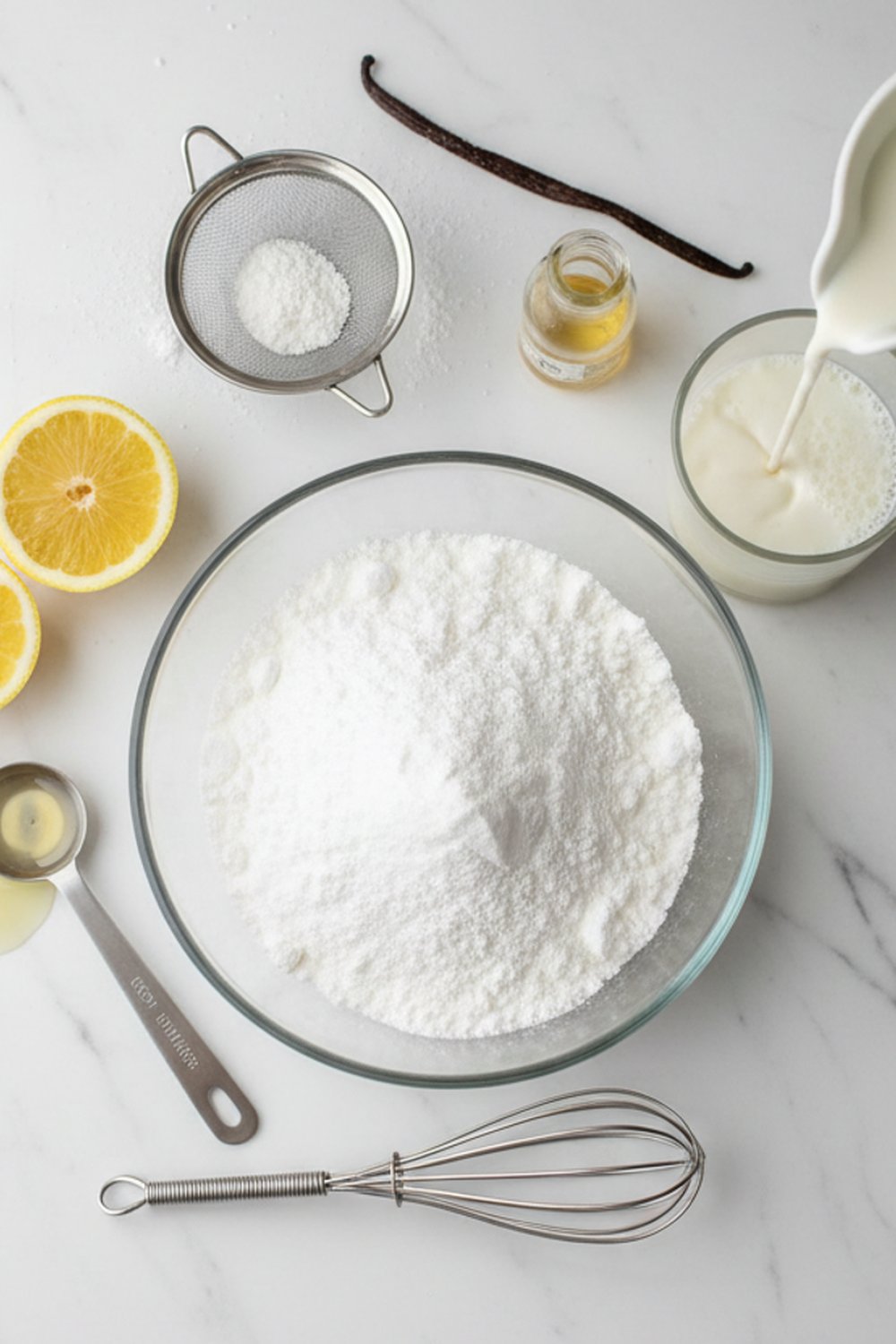
- 1 cup (120 g) confectioners sugar (sift it if it looks lumpy)
- 2 tablespoons whole milk (use water, cream, or juice instead; see swaps below)
- 1/4 teaspoon pure vanilla extract (or almond or lemon extract)
- 1 pinch fine salt (balances the sweetness)
- 1 teaspoon light corn syrup (optional, for shine and a firmer set)
This makes about 1/2 cup, enough to drizzle 12 scones, 24 cookies, or one standard Bundt cake. Double it for a heavily glazed cake.
How to Make Confectioners Sugar Glaze
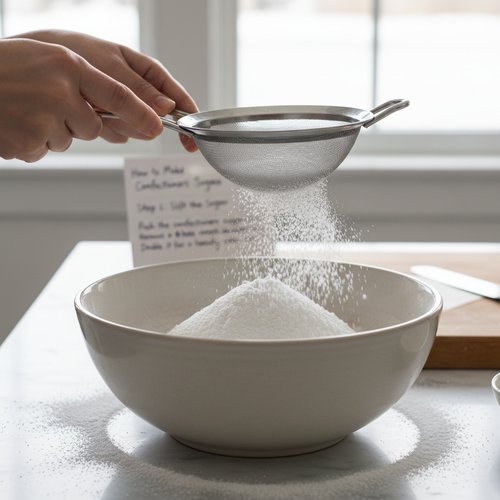
Step 1: Sift the Sugar
Push the confectioners sugar through a fine-mesh sieve into a medium bowl. This takes about 30 seconds and removes the tiny lumps that never whisk out. If your sugar is fresh and loose, you can skip it.
Step 2: Add the Liquid Slowly
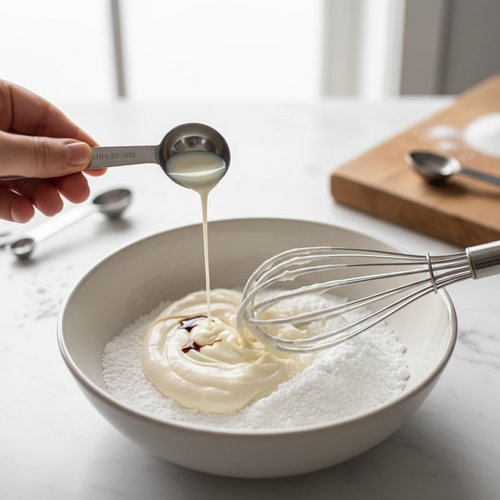
Add the vanilla, salt, and just 1 tablespoon of milk. Whisk until you have a very thick paste. Starting with less liquid is the key to control, because a few drops can change the texture a lot.
Step 3: Whisk Until Smooth
Add the second tablespoon of milk, a teaspoon at a time, whisking for about 30 seconds. Stir in the corn syrup now if you’re using it. The glaze should be completely smooth, with no dry pockets at the bottom of the bowl.
Step 4: Check the Consistency
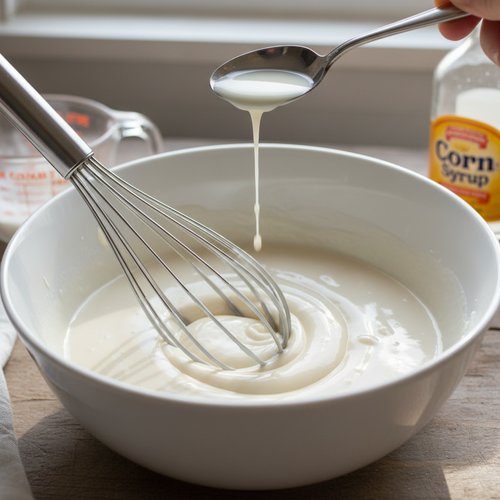
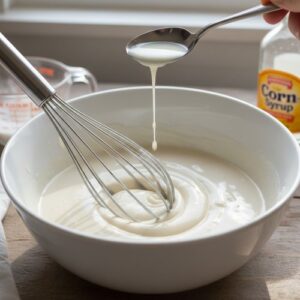
Lift the whisk. For a drizzle, the glaze should fall in a thick ribbon that disappears back into the surface in about 5 seconds. For a thicker, spreadable icing, it should hold its shape for 10 seconds or more.
If it’s too thin, whisk in 1 tablespoon of sifted sugar. If it’s too thick, add liquid 1/2 teaspoon at a time.
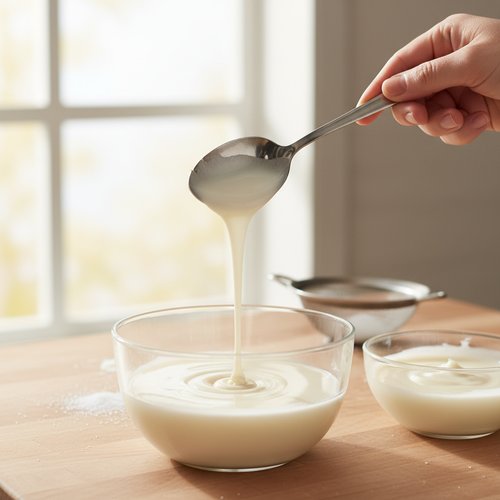
Step 5: Glaze Cooled Baked Goods
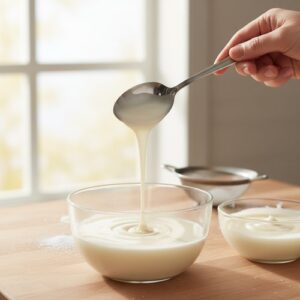
Let your cake, cookies, or rolls cool until just barely warm to the touch. Hot baked goods melt the glaze into a thin, sticky layer that soaks in. Spoon or drizzle the glaze on, then let it set at room temperature for 15 to 20 minutes.
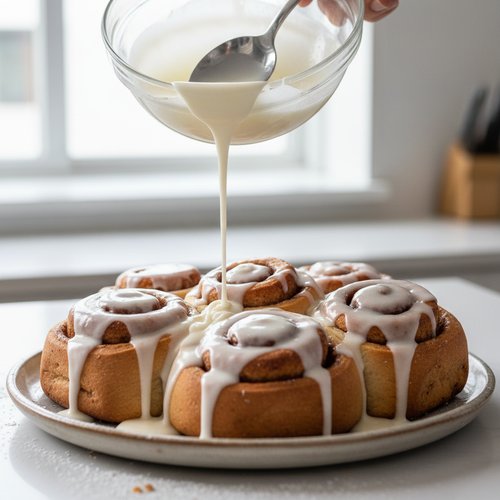
How Do You Make Powdered Sugar Glaze With Milk or Water?
Use the same ratio for both: 1 cup of confectioners sugar to about 2 tablespoons of liquid. Milk gives a creamier, slightly opaque glaze with a richer taste. Water gives a clearer, more translucent glaze that tastes purely sweet, which is nice on spice cakes and cinnamon bread.
Both will set, but milk glaze stays a little softer. Cream makes it the richest and most opaque.
How Can You Make Powdered Sugar Glaze Without Milk?
You can swap the milk for water, fruit juice, citrus juice, brewed coffee, or a dairy-free milk, all at the same 1-to-1 amount. Melted butter works too, but use only 1 tablespoon and add water to loosen it.
For a bakery-style flavor, try orange juice on sweet rolls or a splash of maple syrup in place of some liquid. For a full maple version, see my these homemade cookies.
How Do You Make a Lemon Powdered Sugar Glaze?
Replace the milk with fresh lemon juice. Whisk 1 cup of sifted confectioners sugar with 1 1/2 to 2 tablespoons of lemon juice, 1/2 teaspoon of lemon zest, and a pinch of salt. Lemon juice is thinner than milk, so start with 1 1/2 tablespoons and add more only if needed.
The glaze comes out bright, tart, and a little translucent. Skip the vanilla, or keep just a drop. It’s lovely on pound cake, blueberry muffins, and shortbread.
How Do You Make Powdered Sugar Glaze Harden?
Use less liquid and let it dry uncovered. Aim for 1 cup of sugar to 1 1/2 tablespoons of liquid, and add the teaspoon of light corn syrup for a smooth, glossy finish that sets firmly. Spread it on completely cooled cookies and leave them on a rack for 1 to 2 hours, until the surface is dry to the touch.
Humidity slows setting, so a dry day helps. Glaze made with water hardens a bit more crisply than glaze made with milk. It will never be rock-hard like royal icing, but it should be firm enough to stack cookies once fully dry.
How Can You Make Powdered Sugar Glaze Taste Better?
The easiest upgrades are a pinch of salt, real vanilla, and a bit of flavor that fits the dessert. Plain glaze is just sweet, so small additions make a big difference. Try one of these:
- 1/4 teaspoon almond extract in place of half the vanilla, for sugar cookies and coffee cake
- 1/2 teaspoon citrus zest, for brightness
- 1 teaspoon melted butter, for a richer, rounder flavor
- 1/4 teaspoon cinnamon or a pinch of cardamom, for rolls and spiced bakes
- 1 teaspoon cocoa powder (add an extra splash of milk), for a chocolate version
What Can You Use Instead of Powdered Sugar?
You can make your own by blending granulated sugar. Combine 1 cup of granulated sugar with 1 tablespoon of cornstarch in a high-speed blender and blend for 1 to 2 minutes, until it looks like fine flour. This makes about 1 3/4 cups. Let the dust settle for a minute before opening the lid.
Homemade powdered sugar is slightly less fine than store-bought, so sift it and whisk the glaze a little longer. Don’t use granulated sugar straight, because it won’t dissolve into a smooth glaze.
Can You Store Leftover Glaze?

Recipe for Confectioners Sugar Glaze
Ingredients
- 1 cup confectioners sugar 120 g
- 2 tablespoon whole milk use water, cream, or juice instead; see swaps below
- 1/4 teaspoon pure vanilla extract or almond or lemon extract
- 1 pinch fine salt balances the sweetness
- 1 teaspoon light corn syrup optional, for shine and a firmer set
Instructions
Step 1: Sift the Sugar
- Push the confectioners sugar through a fine-mesh sieve into a medium bowl. This takes about 30 seconds and removes the tiny lumps that never whisk out. If your sugar is fresh and loose, you can skip it.
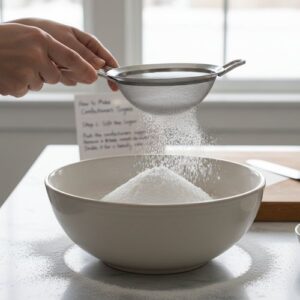
Step 2: Add the Liquid Slowly
- Add the vanilla, salt, and just 1 tablespoon of milk. Whisk until you have a very thick paste. Starting with less liquid is the key to control, because a few drops can change the texture a lot.
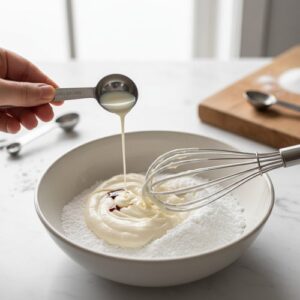
Step 3: Whisk Until Smooth
- Add the second tablespoon of milk, a teaspoon at a time, whisking for about 30 seconds. Stir in the corn syrup now if you're using it. The glaze should be completely smooth, with no dry pockets at the bottom of the bowl.
Step 4: Check the Consistency
- Lift the whisk. For a drizzle, the glaze should fall in a thick ribbon that disappears back into the surface in about 5 seconds. For a thicker, spreadable icing, it should hold its shape for 10 seconds or more. If it's too thin, whisk in 1 tablespoon of sifted sugar. If it's too thick, add liquid 1/2 teaspoon at a time.
Step 5: Glaze Cooled Baked Goods
- Let your cake, cookies, or rolls cool until just barely warm to the touch. Hot baked goods melt the glaze into a thin, sticky layer that soaks in. Spoon or drizzle the glaze on, then let it set at room temperature for 15 to 20 minutes. Lori's Tip: Put a sheet of parchment or a baking sheet under your cooling rack before you glaze. Drips fall on the paper instead of your counter, and you can scrape them back into the bowl and reuse them. Also, whisk with a fork for small batches. It's faster to wash than a whisk.

Yes. Pour it into an airtight container, press plastic wrap against the surface to prevent a crust, and refrigerate for up to 5 days. Let it come to room temperature and whisk well, adding a few drops of liquid if it has thickened.
More Recipes to Try

My name is Lori Walker. I’m a registered dietitian, food blogger and food enthusiast. I share easy healthy, delicious recipes on my blog and review necessary kitchen items. The recipes I share take less… Read more